Loading up your gear for a weekend on the water should feel exciting, not stressful. Many new paddlers feel overwhelmed when trying to figure out the logistics of getting their boats safely to the launch site. You might stare at the back of your pickup and wonder if both watercraft will actually fit without hanging dangerously over the edge.
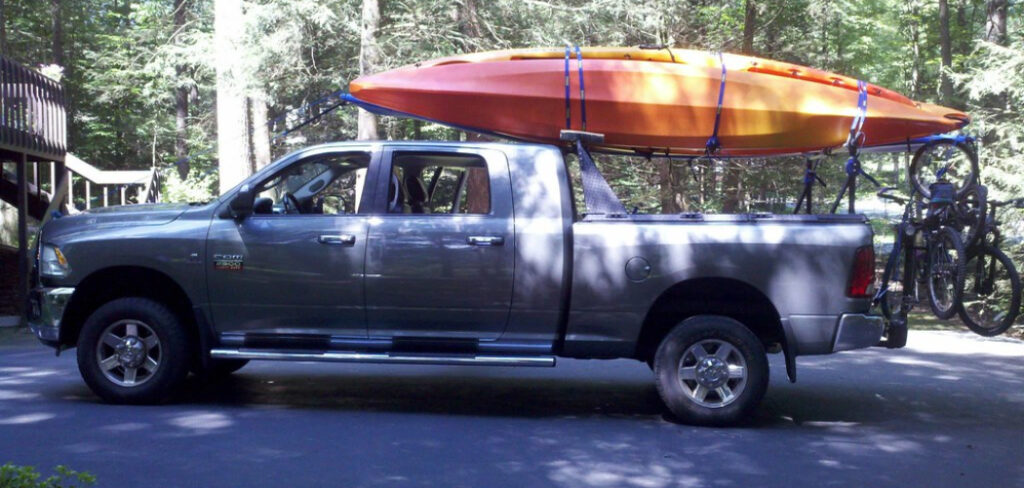
Knowing exactly how to transport 2 kayaks in truck bed changes the entire dynamic of your trip planning. You ditch the anxiety and gain more time enjoying the lakes and rivers you love. We will break down the safest and easiest methods to secure your gear. This expert guide provides clear, step-by-step instructions so you can hit the road with total confidence.
Why Transporting Kayaks via Truck is Ideal
Using a pickup to haul your outdoor equipment offers unbeatable convenience compared to installing complex roof racks. Roof systems require heavy lifting overhead, which drains your energy before you even touch a paddle. The bed of your pickup sits at a manageable height, making the loading process accessible for almost anyone. You simply slide the boats right in.
Hauling your gear this way saves significant money since you avoid buying expensive aftermarket mounting hardware. You also maintain better vehicle aerodynamics and avoid the dreaded wind howl that plagues rooftop carriers on the highway.
Mastering this packing method unlocks spontaneous weekend adventures. You can grab a friend, load up the boats in minutes, and head straight toward the nearest shoreline.
Tools and Materials You’ll Need
Proper preparation prevents serious road hazards. Before you load anything, you must gather the right equipment to keep your boats secure during transit.
- Cam straps: Grab at least four heavy-duty cam straps. Avoid ratchet straps, as they easily overtighten and crack the plastic hull of your boat.
- Red caution flags: You need two high-visibility red flags to tie on the back handles of your boats to comply with local traffic laws.
- Foam blocks or moving blankets: These protect the underside of your boats from scratches against the rough metal liner of your tailgate.
- Bungee cords: Keep a couple handy to secure loose gear inside the hull.
- Tailgate pad (Optional): This adds a thick layer of customized protection over your tailgate edge for ultimate convenience and peace of mind.
7 Step-by-Step Guide on How to Transport 2 Kayaks in Truck Bed
Step 1 – Prepare and clean the cargo area
Before you lift anything heavy, you must clear out any debris from your pickup. Sweeping out dirt, gravel, and loose leaves ensures a flat, smooth surface that will not gouge the plastic hulls of your watercraft. Learning how to transport 2 kayaks in truck bed properly begins with this essential preparation phase.
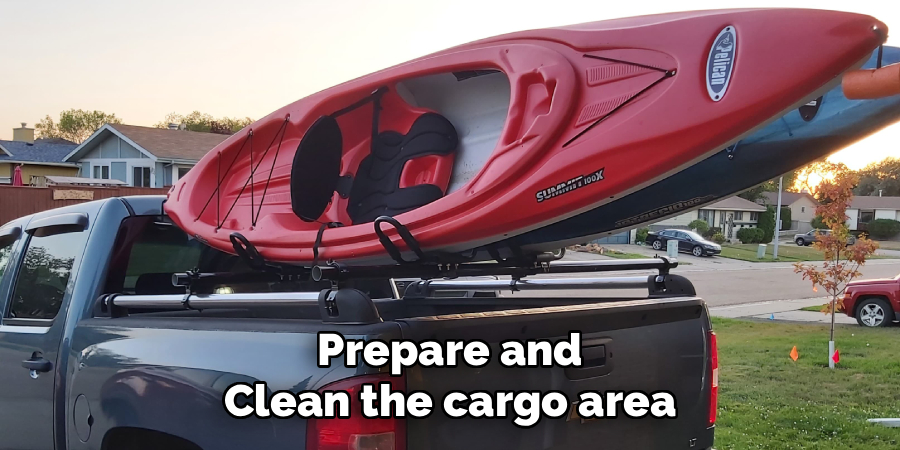
Lower your tailgate and inspect the anchor points in the corners. You need these metal loops to be completely free of rust and easily accessible for your straps. Take a moment to lay down your foam blocks or thick moving blanket right at the edge of the tailgate. This cushioning layer provides vital protection for the heavy boats as they rest against the angled metal during your drive.
Step 2 – Lift and slide the first boat
Grab your first boat by the bow handle and lift it steadily toward the lowered tailgate. Rest the front edge of the hull on the padded edge, then move to the rear handle. Push the boat firmly inward until it slides completely flat against the floor.
You want the hull to lie straight, parallel to the sidewalls. Push it flush against the left side to maximize the remaining floor space. Feel the weight distribution and make sure the heaviest part of the boat sits close to the cab. Keeping the center of gravity low and tight against the front wall prevents unnecessary bouncing when you hit uneven pavement or speed bumps on the way to the water.
Step 3 – Position the second boat alongside
Now you repeat the lifting process for your second boat. Bring it to the tailgate edge, rest the bow, and slide it carefully into the right side of the cargo area. The two boats should sit side by side, fitting snugly like puzzle pieces.
Depending on the width of your pickup, they might lean slightly against each other or the sidewalls. Let them settle naturally into a stable position. Check that the cockpits face straight up toward the sky. If you load them at weird angles, the straps will not bite down correctly, and the boats will shift constantly while you drive. A balanced, side-by-side layout provides the sturdiest foundation for the crucial tie-down phase.
Step 4 – Run the main security straps
Take your first heavy-duty cam strap and toss the buckle end over the top of both boats, near the front cab. Feed the strap through the bottom left anchor ring, up over the boats, and through the bottom right anchor ring.
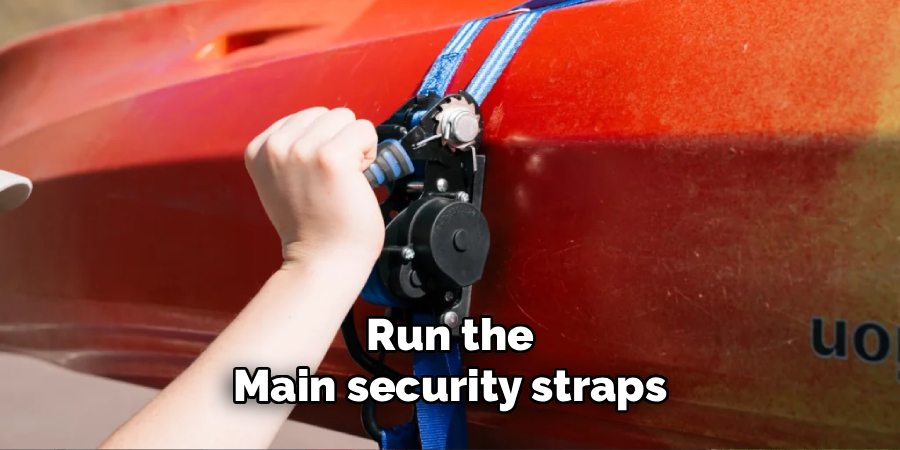
Pull the slack tight, pressing the thick webbing across the deck rigging of both vessels. You want to press down gently on the plastic hulls while you tighten the cam buckle. The tension must feel firm, locking the boats downward against the metal floor. Run your hand along the strap to ensure it lies perfectly flat without any twists. Twists catch the wind and create a terrible buzzing noise that will drive you crazy on the highway.
Step 5 – Secure the rear section over the tailgate
Move to the back of your pickup to secure the overlapping sections of the boats. Take your second cam strap and repeat the threading process using the rear anchor points near the tailgate.
Route the heavy strap directly over the top of both hulls, pulling the webbing tight across the widest part of the rear decks. This specific strap prevents the boats from sliding backward onto the highway when you accelerate from a stoplight. Apply strong downward pressure, but listen closely to the plastic. You never want to hear a cracking or popping sound. The boats should feel firmly planted into the tailgate padding without any obvious warping or bending in their shape.
Step 6 – Attach the safety flags
Walk around to the very back where the sterns of your boats hang past the tailgate. You must attach high-visibility red caution flags to the grab handles of both vessels. The law requires these bright warning markers to alert other drivers of your extended load.
Thread the small flag strings directly through the sturdy plastic toggles on the handles and tie a tight double knot. Let the fabric hang loose so it flutters clearly in the wind. Do not skip this crucial safety step. Drivers following closely behind you often struggle to judge the distance of dark-colored boats protruding from a vehicle. Bright flags prevent dangerous rear-end collisions during sudden stops on busy roads.
Step 7 – Perform a final shake test
Your loading process finishes with a rigorous physical inspection of your handiwork. Grab the back handles of both boats and try to shake them vigorously from side to side. The entire suspension of your truck should sway slightly with your movements, but the boats themselves must remain completely immobilized.
If you notice any sliding or vertical lifting, you must tighten the cam buckles immediately. Taking an extra minute to double-check your tension saves you from a roadside disaster. Once you master how to transport 2 kayaks in truck bed using this exact process, the routine becomes second nature. You can finally hit the driver’s seat with complete confidence, knowing your expensive gear will arrive safe and sound.
Common Mistakes When Hauling Kayaks
Novice paddlers often make dangerous errors that jeopardize their expensive gear and other drivers. The most frequent mistake involves using heavy-duty ratchet straps instead of cam straps. Ratchet straps generate massive mechanical force designed for industrial cargo, which easily crushes hollow plastic boat hulls under pressure. Once the hull warps or cracks, the vessel becomes completely unusable.
Another massive oversight involves leaving the tailgate up and letting the boats rest on the top edge at a steep angle. This precarious position creates massive wind resistance and puts immense stress on a single pressure point, practically begging the boats to slide out backward. People also frequently forget to secure their paddles and loose gear inside the cockpit. Wind funnels into the open truck bed at highway speeds, easily lifting life jackets and expensive carbon-fiber paddles straight into the air.
Finally, many beginners neglect to stop and check their straps after the first ten miles of driving. Nylon webbing naturally stretches slightly under tension, and vibrations from the road often loosen initial tight connections. Failing to perform a quick secondary tightness check usually leads to shifting cargo right when you hit the interstate.
Expert Tips for a Smoother Trip
Experienced outdoor enthusiasts use simple tricks to make hauling gear infinitely easier. Thread a thick cable lock through the scupper holes or grab handles of your boats and attach it directly to your metal anchor points. This deters opportunistic thieves if you need to stop at a restaurant or gas station on your way home.
Consider buying a dedicated bed extender if your boats measure over twelve feet long. This simple metal frame slides right into your trailer hitch, providing a sturdy horizontal crossbar that supports the extreme rear of your load. It removes all the stress from your tailgate and prevents excessive bouncing over rough terrain.
Finally, always toss a spare cam strap in your glove box. Straps fray over time, and having a backup guarantees you never get stranded at the boat ramp.
Frequently Asked Questions
Can I leave my tailgate up while hauling boats?
You should generally leave your tailgate down when hauling long watercraft. Leaving it up forces the boats to rest at a steep, unstable angle that catches dangerous crosswinds. The raised edge also creates an intense pressure point that can easily dent or crack the plastic hull. Lowering the tailgate provides a flat, stable platform.
Do I legally need red flags on my boats?
Yes, traffic laws in almost every region require bright red or orange caution flags for any load extending past your rear bumper. You must tie them clearly to the furthest protruding point of the boats. Failing to use these safety markers often results in a hefty traffic ticket and endangers drivers behind you.
Are ratchet straps safe for plastic hulls?
You must never use ratchet straps to secure hollow plastic vessels. The ratcheting mechanism creates an excessive amount of mechanical force that quickly crushes, warps, or cracks the rigid plastic. You should always rely on heavy-duty cam straps, which allow you to pull the webbing tight by hand without risking severe structural damage.
How far can boats safely hang out the back?
Most states allow cargo to overhang up to four feet beyond the rear bumper without requiring specialized permits. However, you should check your specific local regulations before hitting the highway. If your watercraft extend further than four feet, you absolutely must use a hitch-mounted bed extender to support the excess length safely.
Should I transport my boats upside down?
Laying your boats right-side up usually provides the most stability when resting flat against the floor. However, if it rains during your drive, right-side up cockpits will quickly fill with heavy water. If you expect bad weather, flip them upside down or invest in quality cockpit covers to keep the interiors completely dry.
Conclusion
Getting your gear to the water safely allows you to focus entirely on the adventure ahead. When you follow these clear preparation and securing steps, you completely eliminate the anxiety of watching your rearview mirror. You no longer have to worry about shifting cargo or dangerous road hazards ruining your trip.
We covered the essential materials required, the exact threading techniques for your cam straps, and the critical mistakes you must avoid. Practice this routine a few times in your driveway, and you will quickly master the exact mechanics. Understanding how to transport 2 kayaks in truck bed correctly transforms you into a confident and capable outdoor enthusiast.
You can finally embrace spontaneous weekend trips without dreading the packing process. Now, grab your gear, double-check your tension straps, and head out to the nearest lake. Your next great paddling adventure awaits, and your equipment will arrive perfectly intact.

About Caleb
Caleb Merritt is a Virginia-based outdoor writer and gear analyst who has spent over a decade sleeping on the ground, crossing mountain passes, and obsessively shaving grams off his pack weight. He holds a Bachelor of Science in Environmental Science from James Madison University, where he also served as president of the university’s outdoor recreation club. After graduating, he spent three years as a wilderness educator with a backcountry youth program in the Shenandoah Valley — teaching Leave No Trace ethics, backcountry navigation, and campcraft — before moving into full-time writing in 2018.
His work focuses on one core belief: the best gear is the gear you understand. Whether he’s doing a side-by-side weight comparison of ultralight shelters or writing a beginner’s guide to building a sub-20-lb base weight kit, Caleb writes with the same directness you’d expect from a trusted trail partner. He has logged more than 4,000 miles across iconic routes including the John Muir Trail, the Wind River Range, Vermont’s Long Trail, and the Collegiate Peaks Loop in Colorado.
Areas of Expertise
- Ultralight backpacking systems and base weight optimization
- Tent, tarp, and shelter testing across three-season and shoulder-season conditions
- Sleeping bag and quilt temperature rating verification
- Backpacking nutrition, meal planning, and calorie-per-ounce analysis
- Leave No Trace principles and wilderness ethics
- Campfire safety, bear country protocols, and water treatment methods
- Gear care, repair, and long-term durability assessment
Education
James Madison University — B.S. in Environmental Science, 2015
During his time at JMU, Caleb served as President of the Outdoor Recreation Club, where he planned and led more than 30 backcountry trips annually across the Blue Ridge Mountains and Appalachian Trail corridor. The role sharpened his ability to assess gear performance under real conditions, manage group safety in remote environments, and develop the kind of practical trail knowledge that no classroom can teach.
Professional Experience
Gear Writer & Senior Contributor — [campeox.com]
Produces in-depth gear reviews, buyer’s guides, and how-to content across backpacking, camping, and ultralight hiking categories. Tests all gear in real field conditions before publishing recommendations.
Wilderness Educator & Trip Leader — Shenandoah Backcountry Youth Program — 2015–2018 Led multi-day backcountry expeditions for teens and young adults throughout Shenandoah National Park and George Washington National Forest. Taught LNT principles, orienteering, first aid awareness, and campcraft fundamentals.
Outdoor Recreation Club President — James Madison University — 2013–2015 Organized and led university-sponsored hiking, backpacking, and camping trips in the Blue Ridge Mountains and Appalachian Trail corridor. Managed club budget, safety protocols, and trip logistics for a membership of 120+ students.
Editorial Standards
Every piece of gear Caleb recommends has been personally tested in the field — not just unboxed and described. His review process includes a minimum of two overnight trips per shelter, a full-season evaluation for sleep systems, and side-by-side comparisons wherever possible. He does not accept payment for positive reviews. Affiliate relationships, where they exist, are always disclosed in accordance with FTC guidelines.
All factual claims about gear specifications, trail distances, and safety recommendations are cross-referenced against manufacturer data sheets and established sources such as the Leave No Trace Center for Outdoor Ethics and the American Hiking Society before publication.