Grabbing a paddle and hopping onto a board looks incredibly intuitive when you watch experienced paddlers glide across a calm lake. You might think you just grab the shaft and start pulling water. However, understanding how to hold a paddle board paddle correctly makes a massive difference in your time on the water.
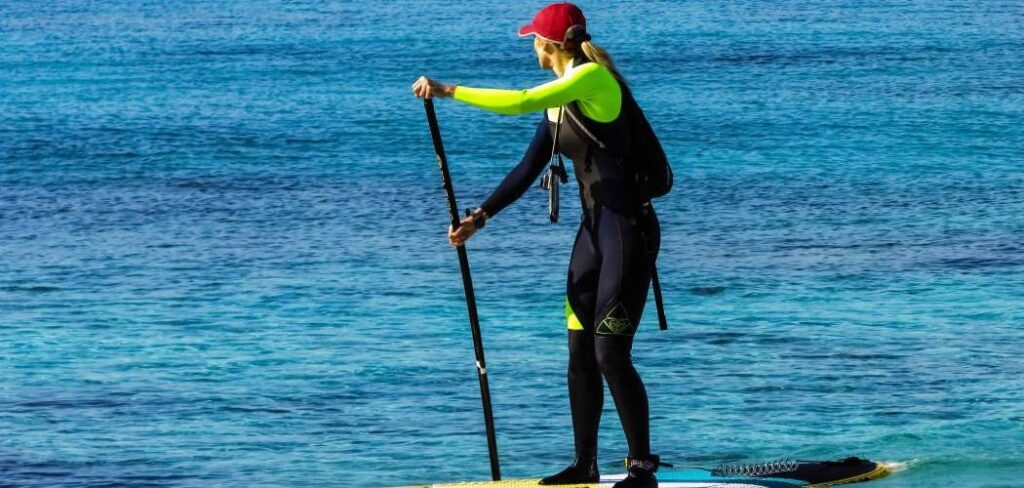
Proper technique transforms your stroke from a tiring, awkward chore into a smooth, powerful, and relaxing motion. By taking a few moments to learn the mechanics of your grip, you will prevent muscle fatigue, avoid accidental injuries, and travel much further with significantly less effort. This guide breaks down the exact mechanics of gripping and positioning your paddle so you can get the most out of every single stroke.
Why Learning to Hold Your Paddle Correctly Matters
Your paddle serves as your only engine on the water. If your grip is too tight, too narrow, or backward, your body compensates by straining the wrong muscles. Holding the paddle incorrectly forces your arms and shoulders to do all the heavy lifting, which quickly leads to soreness and shortens your time on the water.
When you grip the paddle the right way, you naturally engage your stronger core and back muscles. This anatomical advantage generates more propulsion and stabilizes your balance on the board. Proper grip technique also protects your joints from repetitive stress injuries, ensuring you can enjoy paddle boarding for years to come without aching wrists or a stiff lower back.
Tools and Materials You’ll Need
Before heading out to the water, you only need a few basic items to practice and perfect your grip. First, you need a stand-up paddle board (SUP) paddle. An adjustable paddle works best for beginners because it allows you to experiment with different lengths until you find your sweet spot.
You will also want a flat surface, like a grassy lawn or a sandy beach, to practice your grip on dry land before dealing with the instability of the water. Wearing a comfortable personal flotation device (PFD) during practice helps you get used to the slight restriction in arm movement. Finally, bring a positive attitude and a willingness to adjust your habits.
Step-by-Step Guide on How to Hold a Paddle Board Paddle
Step 1 – Identify the proper blade angle and direction
The most common mistake beginners make is holding the paddle backward. When figuring out how to hold a paddle board paddle, you must look closely at the blade at the bottom of the shaft. You will notice that the blade has a slight bend or angle to it. This angle needs to point away from you, toward the nose of your board.
Think of it like a scoop moving through the water. If the angle points toward you, the blade will flutter and push the water downward, pulling you off balance and wasting your energy. Run your hand down the smooth face of the blade to feel the forward curve. Keeping that scoop facing forward ensures a clean, efficient stroke that lifts your board and glides it smoothly across the surface.
Step 2 – Position your top hand on the T-grip
Your top hand controls the angle and rotation of the paddle, acting as the steering wheel for your stroke. Reach up and wrap your fingers gently around the T-grip at the very top of the shaft. Your palm should rest comfortably over the top of the handle, with your fingers draped naturally over the front edge.
Avoid gripping the handle with a white-knuckle squeeze. A relaxed, open grip prevents wrist cramps and allows you to push downward smoothly during the stroke. You should feel the smooth plastic or carbon fiber resting right in the center of your palm. This comfortable, secure placement gives you the leverage you need to drive the blade into the water without exhausting your forearm muscles.
Step 3 – Position your bottom hand on the shaft
Your bottom hand acts as the fulcrum, providing the pulling power for your forward movement. Drop your lower hand down the shaft of the paddle. Wrap your fingers lightly around the circumference of the pole. Again, keep your grip relaxed. You want to feel the texture of the shaft without squeezing it like a baseball bat.
Your bottom arm should remain relatively straight, with just a slight, natural bend in the elbow. If you squeeze too tightly, you will immediately feel tension creeping up into your biceps and shoulders. A relaxed lower hand allows the shaft to rotate slightly if needed and keeps your blood flowing properly, ensuring your arms stay fresh and responsive for the entire duration of your paddling session.
Step 4 – Establish the perfect grip width
Finding the right distance between your hands is crucial for balance and power. A core element of how to hold a paddle board paddle involves creating a structural triangle with your arms and the shaft. Hold the paddle horizontally above your head with both hands. Adjust your hand spacing until your elbows form sharp, ninety-degree angles.
Your arms should look like a goalpost. Once you have those ninety-degree angles, lower the paddle back down while maintaining that exact hand spacing. This width provides optimal leverage. If your hands sit too close together, you lose power and stability. If they sit too far apart, you restrict your range of motion and force your body into awkward, uncomfortable positions during the stroke.
Step 5 – Adjust the paddle height to your body
A paddle that is too long or too short ruins your grip mechanics and forces you to compensate with poor posture. Stand the paddle vertically on the ground right in front of your toes. Reach your top arm straight up into the air. The T-grip should rest comfortably in the palm of your outstretched hand, right at the bend of your wrist.
If you have an adjustable paddle, unlatch the clasp and slide the handle up or down until it matches this height. Lock it securely in place. Feeling the handle fit perfectly into your palm at full extension guarantees that you can bury the entire blade in the water during your stroke without having to awkwardly hunch over or bend your knees too deeply.
Step 6 – Engage your core to drive the paddle
Your grip is only as good as the muscles supporting it. Rather than pulling the paddle backward with your arms, you want to use your hands to anchor the blade in the water and pull your body past it. Keep your hands firmly but comfortably in their established positions. As you reach forward to plant the blade, hinge slightly at your hips and tighten your abdominal muscles.
Feel the tension in your core. When you pull, twist your torso and use your back muscles to draw the board forward. Your arms should act strictly as levers connecting your powerful core to the paddle. You will instantly feel the difference as the strain leaves your shoulders and transfers to the much stronger muscles of your midsection.
Step 7 – Switch your hand positions seamlessly
You will inevitably need to switch paddling sides to keep your board moving in a straight line. Transitioning your grip smoothly keeps your momentum alive. When moving the paddle from your right side to your left side, slide your lower hand up the shaft to take over the T-grip. Simultaneously, let go with your original top hand and drop it down the shaft to become the new bottom hand.
Practice this fluid, sliding motion on dry land until it feels like second nature. You should feel the smooth friction of the shaft sliding through your fingers. Mastering this transition allows you to maintain your speed and balance, keeping your strokes continuous and your grip perfectly spaced every single time you change sides.
Common Mistakes When Holding a Paddle
Many new paddlers struggle with a few predictable grip errors. The most frequent issue is the “death grip,” where the paddler squeezes the shaft so tightly that their forearms ache within minutes. This unnecessary tension travels up to the neck and shoulders. Another prevalent mistake is holding the hands too close together, which mimics holding a broomstick rather than a paddle.
This narrow grip completely eliminates your leverage and forces you to use short, weak strokes. Lastly, many people forget to keep their top hand directly over the shaft during the stroke. If your top hand drifts off to the side, the blade enters the water at an angle, causing the board to turn sharply rather than tracking straight ahead.
Expert Tips
To maximize your efficiency, always keep your top hand stacked directly above your bottom hand during the power phase of the stroke. Imagine a straight vertical line running from your top shoulder, down through both hands, and into the blade. This alignment transfers maximum energy into the water.
Additionally, focus on pushing down with your top hand rather than just pulling back with your bottom hand. This push-pull dynamic creates a lever effect that dramatically increases your speed. Finally, keep your eyes looking toward the horizon rather than staring down at your hands or the blade. Looking forward naturally aligns your spine, improves your balance, and helps your arms maintain the correct grip structure without you having to consciously overthink it.
Frequently Asked Questions
Do I need to wear gloves when holding my paddle?
You generally do not need gloves for casual paddle boarding. A relaxed grip usually prevents blisters and calluses from forming. However, if you plan to paddle for several hours or have particularly sensitive skin, specialized paddling gloves can provide extra comfort and grip, especially in cold or wet conditions.
Why do my wrists hurt after paddle boarding?
Wrist pain almost always stems from holding the paddle with a rigid, over-tightened grip or bending your wrists at sharp angles during the stroke. Keep your wrists straight and aligned with your forearms. Loosening your grip on both the T-grip and the shaft allows your hands to move naturally and relieves joint pressure.
How do I hold the paddle when I want to stop or slow down?
To stop your board, you keep your hands in their standard positions but perform a reverse stroke. Plant the blade in the water behind you and push forward toward the nose of the board. Maintain a firm grip, as the resistance of the water pushing against the back of the blade will be strong.
Can I use tape on my paddle shaft for better grip?
You can apply marine-grade grip tape or surf wax to the shaft if you find your bottom hand slipping frequently. Keep in mind that adding texture increases friction, which can lead to blisters if you grip too tightly. Most modern paddles feature a matte finish that provides plenty of natural traction.
Does my grip change if I paddle on my knees?
When you paddle from a kneeling position, your grip spacing and hand placement remain exactly the same. However, you will need to choke down on the paddle to accommodate your lower center of gravity. Move your top hand off the T-grip and wrap it around the upper shaft, moving your bottom hand down accordingly.
Conclusion
Mastering the mechanics of your grip transforms paddle boarding from a strenuous workout into a truly enjoyable experience. When you take the time to angle the blade correctly, space your hands properly, and maintain a relaxed hold, you unlock the full potential of your body’s mechanics. You will glide faster, paddle longer, and wake up the next day without sore shoulders. Once you master how to hold a paddle board paddle, everything else on the water becomes infinitely easier and more natural. Grab your gear, head down to your favorite body of water, and put these techniques into practice. You are now ready to paddle with confidence and precision.

About Caleb
Caleb Merritt is a Virginia-based outdoor writer and gear analyst who has spent over a decade sleeping on the ground, crossing mountain passes, and obsessively shaving grams off his pack weight. He holds a Bachelor of Science in Environmental Science from James Madison University, where he also served as president of the university’s outdoor recreation club. After graduating, he spent three years as a wilderness educator with a backcountry youth program in the Shenandoah Valley — teaching Leave No Trace ethics, backcountry navigation, and campcraft — before moving into full-time writing in 2018.
His work focuses on one core belief: the best gear is the gear you understand. Whether he’s doing a side-by-side weight comparison of ultralight shelters or writing a beginner’s guide to building a sub-20-lb base weight kit, Caleb writes with the same directness you’d expect from a trusted trail partner. He has logged more than 4,000 miles across iconic routes including the John Muir Trail, the Wind River Range, Vermont’s Long Trail, and the Collegiate Peaks Loop in Colorado.
Areas of Expertise
- Ultralight backpacking systems and base weight optimization
- Tent, tarp, and shelter testing across three-season and shoulder-season conditions
- Sleeping bag and quilt temperature rating verification
- Backpacking nutrition, meal planning, and calorie-per-ounce analysis
- Leave No Trace principles and wilderness ethics
- Campfire safety, bear country protocols, and water treatment methods
- Gear care, repair, and long-term durability assessment
Education
James Madison University — B.S. in Environmental Science, 2015
During his time at JMU, Caleb served as President of the Outdoor Recreation Club, where he planned and led more than 30 backcountry trips annually across the Blue Ridge Mountains and Appalachian Trail corridor. The role sharpened his ability to assess gear performance under real conditions, manage group safety in remote environments, and develop the kind of practical trail knowledge that no classroom can teach.
Professional Experience
Gear Writer & Senior Contributor — [Your Website Name]
Produces in-depth gear reviews, buyer’s guides, and how-to content across backpacking, camping, and ultralight hiking categories. Tests all gear in real field conditions before publishing recommendations.
Wilderness Educator & Trip Leader — Shenandoah Backcountry Youth Program — 2015–2018 Led multi-day backcountry expeditions for teens and young adults throughout Shenandoah National Park and George Washington National Forest. Taught LNT principles, orienteering, first aid awareness, and campcraft fundamentals.
Outdoor Recreation Club President — James Madison University — 2013–2015 Organized and led university-sponsored hiking, backpacking, and camping trips in the Blue Ridge Mountains and Appalachian Trail corridor. Managed club budget, safety protocols, and trip logistics for a membership of 120+ students.
Editorial Standards
Every piece of gear Caleb recommends has been personally tested in the field — not just unboxed and described. His review process includes a minimum of two overnight trips per shelter, a full-season evaluation for sleep systems, and side-by-side comparisons wherever possible. He does not accept payment for positive reviews. Affiliate relationships, where they exist, are always disclosed in accordance with FTC guidelines.
All factual claims about gear specifications, trail distances, and safety recommendations are cross-referenced against manufacturer data sheets and established sources such as the Leave No Trace Center for Outdoor Ethics and the American Hiking Society before publication.