There is nothing quite like sitting around a crackling campfire, but getting that fire started requires good kindling. If your trusty tool is bouncing off logs instead of biting into them, you might be frustrated. A dull blade is not just annoying; it is also incredibly dangerous. When you swing a blunt edge, you have to use more force, which increases the chance of slipping and hurting yourself.
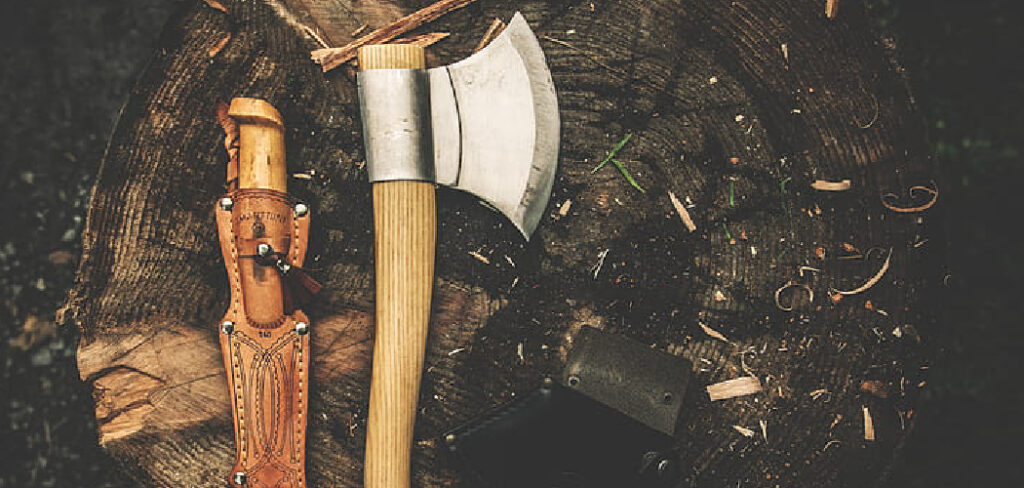
Fortunately, bringing that edge back to life is easier than you might think. Whether you are getting ready for a weekend trip to the mountains or just doing some backyard maintenance, knowing how to sharpen camp hatchet blades is an essential outdoor skill. This guide will walk you through the process clearly and safely, turning your blunt tool back into a wood-chopping machine. You will be splitting firewood like a pro in no time.
Why a Sharp Edge Matters for Your Safety
A well-maintained blade does the hard work for you. When you strike a piece of wood, a properly honed edge bites deep into the grain immediately. This efficiency means you expend much less energy, keeping your arms fresh for other campsite chores. Conversely, a dull edge tends to glance off hard wood surfaces. This deflection can send the heavy steel head swinging wildly toward your legs or feet, causing severe accidents.
Furthermore, a clean cut from a keen edge leaves smooth wood chunks that are much easier to stack and burn. Taking just ten to fifteen minutes to maintain your gear before heading into the wilderness ensures you stay safe and comfortable. Preparing your tools properly sets the tone for a successful, stress-free outdoor adventure.
Step-by-Step Guide: How to Sharpen Camp Hatchet
Step 1: Gather Your Sharpening Tools and Safety Gear
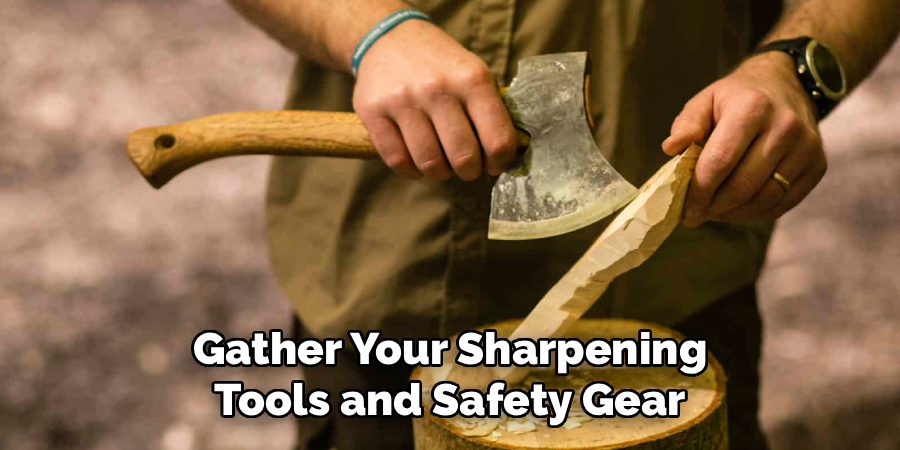
Before you begin the process of restoring your blade, you must gather all the necessary supplies in a well-lit workspace. You will need a sturdy pair of thick leather gloves to protect your hands from accidental slips. Grab a reliable bastard file for the heavy material removal, along with a dual-sided sharpening puck or whetstone for the finer honing process. You should also have a small bottle of honing oil or lubricating fluid to protect the stone and keep metal shavings from clogging the abrasive surface. Finally, secure a heavy-duty bench vise or a few sturdy C-clamps to hold the tool firmly in place. Proper preparation makes the entire task much safer and more efficient.
Step 2: Secure the Axe Head Firmly
Safety is your top priority when dealing with exposed blades, so securing the head prevents unpredictable movements. Place the steel head into a sturdy bench vise with the edge facing slightly outward and upward. If you do not have a vise, you can clamp the handle firmly to the edge of a solid workbench or picnic table. Wrap a shop rag around the metal head before clamping it to avoid scratching the steel surface with the vise jaws. Double-check that the tool cannot wiggle, slide, or shift when you apply downward pressure. A tightly secured handle ensures your file strokes remain consistent, giving you total control over the exact angle you need to achieve the perfect cutting edge.
Step 3: Remove Rust and Inspect the Edge
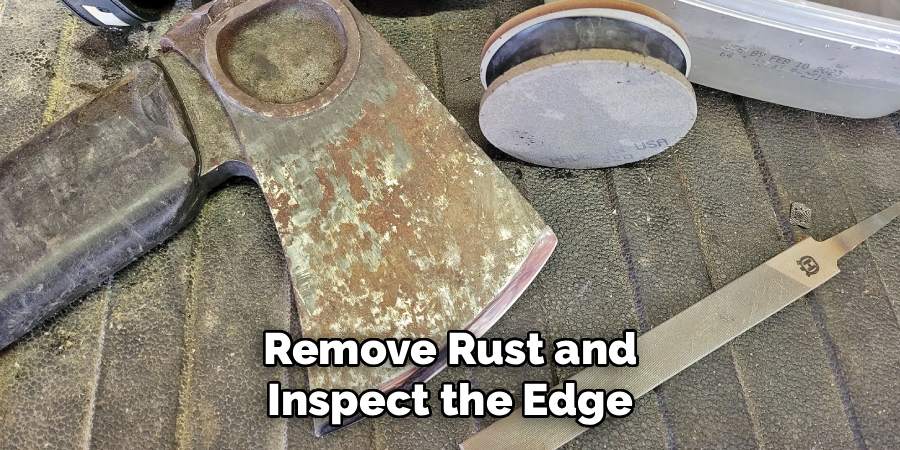
Take a close look at the steel surface before removing any material. Look for deep nicks, rolls in the edge, or heavy patches of rust that might compromise the tool. Use a coarse wire brush or some steel wool to scrub away any surface oxidation, revealing the bare metal underneath. This cleaning step allows you to accurately see the existing bevel and gauge exactly how much steel you need to file away. If you notice major chips or dents in the edge, you will need to spend extra time with the coarse file to level the steel. Identifying these imperfections early prevents you from creating an uneven bevel that compromises your chopping performance at the campsite.
Step 4: Establish the Bevel When Learning How to Sharpen Camp Hatchet
Hold the bastard file securely with both hands, placing one hand on the handle and the fingers of your other hand near the tip. Match the natural angle of the existing bevel, which is usually between twenty and thirty degrees. Push the file forward across the blade edge in a smooth, sweeping motion, applying medium pressure. Always lift the file completely off the steel when pulling it back toward you, as dragging it backward will quickly ruin the file teeth. Count your strokes on one side, then flip the tool over and repeat the exact same number of strokes on the opposite side. This careful, methodical filing ensures the edge remains perfectly centered and completely symmetrical.
Step 5: Transition to a Coarse Sharpening Stone
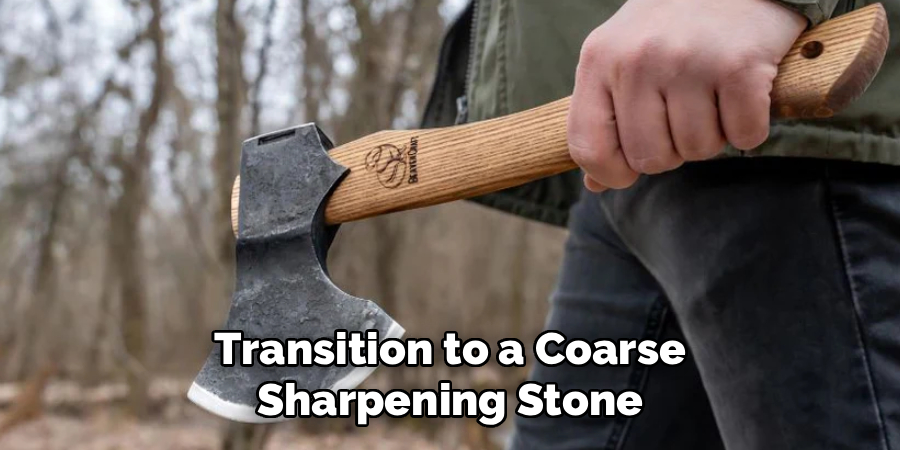
Once you have established a clean, even bevel and removed the major nicks with your file, it is time to refine the edge further. Take your dual-sided sharpening puck and apply a few generous drops of honing oil to the coarse side. The oil suspends the tiny metal shavings, preventing them from clogging the abrasive grit. Press the coarse stone against the blade, matching the bevel angle you just created with the file. Move the stone in tight, overlapping circular motions along the entire length of the curve. Work slowly from the top corner down to the bottom corner, ensuring you cover every inch evenly. Repeat this circular grinding process on both sides until the deep file scratches disappear entirely.
Step 6: Finalizing How to Sharpen Camp Hatchet With a Fine Stone
Flip your sharpening puck over to expose the fine grit side, which will give your tool that razor-sharp finish. Apply a little more honing oil to the fine surface to ensure optimal lubrication during this final grinding phase. Use the exact same overlapping circular motions you used with the coarse side, maintaining a consistent angle against the bevel. You require much less downward pressure during this stage, letting the fine abrasive gently polish the steel. Keep feeling the edge carefully with your thumb, swiping perpendicular to the blade to check for a small metal burr. Once the edge feels completely smooth and bites slightly into your thumbnail, you have achieved a fantastically sharp, functional cutting surface.
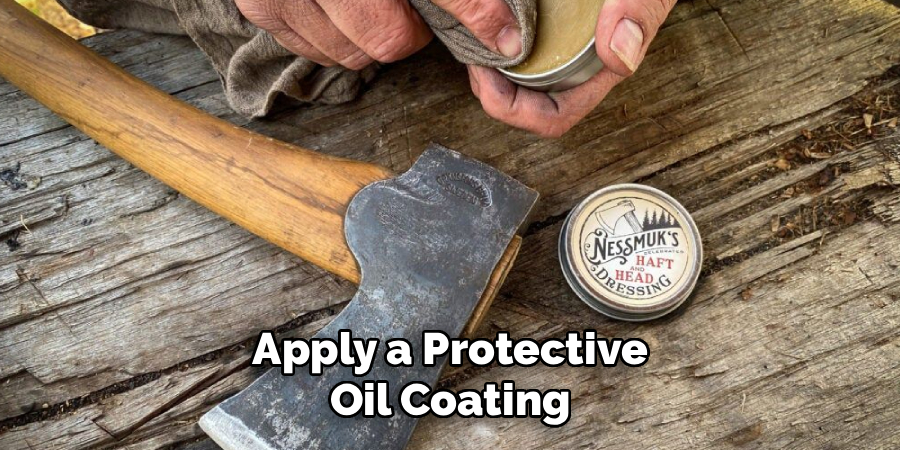
Step 7: Apply a Protective Oil Coating
The bare metal you just exposed is highly susceptible to moisture and will begin to rust almost immediately if left unprotected. Wipe the entire steel head down with a clean, dry cloth to remove any remaining metal dust, honing oil, and grit. Once the surface is completely clean, massage a light layer of protective lubricant into the steel. Boiled linseed oil, standard machine oil, or even plain mineral oil work perfectly for this task. Do not forget to rub some linseed oil into the wooden handle as well to prevent the timber from drying out and cracking. Storing your freshly tuned gear in a dry leather sheath guarantees it stays pristine until your next wilderness excursion.
Frequently Asked Questions
How Often Should I Sharpen My Camping Hatchet?
You should maintain your blade based on how frequently you use it. For casual campers, a thorough honing once a season is usually sufficient. However, if you chop hard, knotty wood regularly, you may need a touch-up after every trip. Look for these signs that it is time for maintenance:
- Glancing blows
- Visible edge damage
- Difficulty cutting kindling
Can I Use An Angle Grinder To Sharpen The Blade?
While an angle grinder removes material incredibly fast, it is generally not recommended for beginners. Power tools generate extreme heat very quickly, which can easily ruin the temper of the steel. If you accidentally overheat the edge, the metal becomes brittle and prone to chipping. Using hand files and stones ensures you keep the steel cool and maintain total control over the bevel.
Do I Need To Use Water Or Oil On My Stone?
The type of lubrication you need depends entirely on the specific stone you own. Whetstones typically require soaking in water before use, while oil stones need a few drops of mineral or honing oil. Using a lubricant is crucial because it:
- Prevents metal dust from clogging the grit
- Reduces friction heat
- Extends the life of your stone
What Is The Best Angle For A Chopping Blade?
Most standard camping hatchets perform best with a bevel angle between twenty and thirty degrees. A thicker, wider angle provides incredible durability for splitting thick logs, preventing the edge from chipping. Conversely, a thinner angle slices much better but is fragile. Try to match the original factory angle unless you have a specific need to reprofile the tool entirely.
How Do I Know When The Edge Is Sharp Enough?
You can test your edge safety and effectively without running your fingers along the blade. The most common method is the paper test. Hold a sheet of standard printer paper and slice downward with the blade. If it cuts smoothly without tearing the fibers, your tool is ready for the campsite. Additionally, the edge should easily shave thin curls off a soft piece of pine wood.
Conclusion
Maintaining your outdoor gear does not have to be an intimidating chore. By investing a little bit of time, the right tools, and some elbow grease, you can transform a dull piece of metal into a reliable companion for all your wilderness trips. We covered the importance of securing your tool safely, using a file to establish a clean bevel, and refining that edge with a stone.
Now that you understand the mechanics of metalwork, it is time to head to the garage and practice. Grab your trusty file and stone, and put this guide on how to sharpen camp hatchet blades to the test. You will instantly feel the difference during your next campfire preparation.
A well-maintained tool guarantees better performance, safer chopping, and a much more enjoyable experience in the great outdoors. Keep your edge keen, store it properly in a dry sheath, and enjoy the satisfaction of splitting firewood with perfectly tuned equipment on your next adventure.

About Caleb
Caleb Merritt is a Virginia-based outdoor writer and gear analyst who has spent over a decade sleeping on the ground, crossing mountain passes, and obsessively shaving grams off his pack weight. He holds a Bachelor of Science in Environmental Science from James Madison University, where he also served as president of the university’s outdoor recreation club. After graduating, he spent three years as a wilderness educator with a backcountry youth program in the Shenandoah Valley — teaching Leave No Trace ethics, backcountry navigation, and campcraft — before moving into full-time writing in 2018.
His work focuses on one core belief: the best gear is the gear you understand. Whether he’s doing a side-by-side weight comparison of ultralight shelters or writing a beginner’s guide to building a sub-20-lb base weight kit, Caleb writes with the same directness you’d expect from a trusted trail partner. He has logged more than 4,000 miles across iconic routes including the John Muir Trail, the Wind River Range, Vermont’s Long Trail, and the Collegiate Peaks Loop in Colorado.
Areas of Expertise
- Ultralight backpacking systems and base weight optimization
- Tent, tarp, and shelter testing across three-season and shoulder-season conditions
- Sleeping bag and quilt temperature rating verification
- Backpacking nutrition, meal planning, and calorie-per-ounce analysis
- Leave No Trace principles and wilderness ethics
- Campfire safety, bear country protocols, and water treatment methods
- Gear care, repair, and long-term durability assessment
Education
James Madison University — B.S. in Environmental Science, 2015
During his time at JMU, Caleb served as President of the Outdoor Recreation Club, where he planned and led more than 30 backcountry trips annually across the Blue Ridge Mountains and Appalachian Trail corridor. The role sharpened his ability to assess gear performance under real conditions, manage group safety in remote environments, and develop the kind of practical trail knowledge that no classroom can teach.
Professional Experience
Gear Writer & Senior Contributor — [campeox.com]
Produces in-depth gear reviews, buyer’s guides, and how-to content across backpacking, camping, and ultralight hiking categories. Tests all gear in real field conditions before publishing recommendations.
Wilderness Educator & Trip Leader — Shenandoah Backcountry Youth Program — 2015–2018 Led multi-day backcountry expeditions for teens and young adults throughout Shenandoah National Park and George Washington National Forest. Taught LNT principles, orienteering, first aid awareness, and campcraft fundamentals.
Outdoor Recreation Club President — James Madison University — 2013–2015 Organized and led university-sponsored hiking, backpacking, and camping trips in the Blue Ridge Mountains and Appalachian Trail corridor. Managed club budget, safety protocols, and trip logistics for a membership of 120+ students.
Editorial Standards
Every piece of gear Caleb recommends has been personally tested in the field — not just unboxed and described. His review process includes a minimum of two overnight trips per shelter, a full-season evaluation for sleep systems, and side-by-side comparisons wherever possible. He does not accept payment for positive reviews. Affiliate relationships, where they exist, are always disclosed in accordance with FTC guidelines.
All factual claims about gear specifications, trail distances, and safety recommendations are cross-referenced against manufacturer data sheets and established sources such as the Leave No Trace Center for Outdoor Ethics and the American Hiking Society before publication.