Quick answer: To select the right stand-up paddleboard (SUP), you must match the board’s hull type, dimensions, and construction material to your body weight and intended activity. Beginners generally thrive on wide, inflatable, all-around boards with planing hulls, as these models offer maximum stability and easy storage for recreational paddling.
Stepping onto a paddleboard for the first time brings a unique sense of freedom and excitement. You glide across the water, enjoying the fresh air and a full-body workout. However, your experience depends heavily on the equipment under your feet. Riding the wrong board leads to frustration, constant falls, and unnecessary physical fatigue.
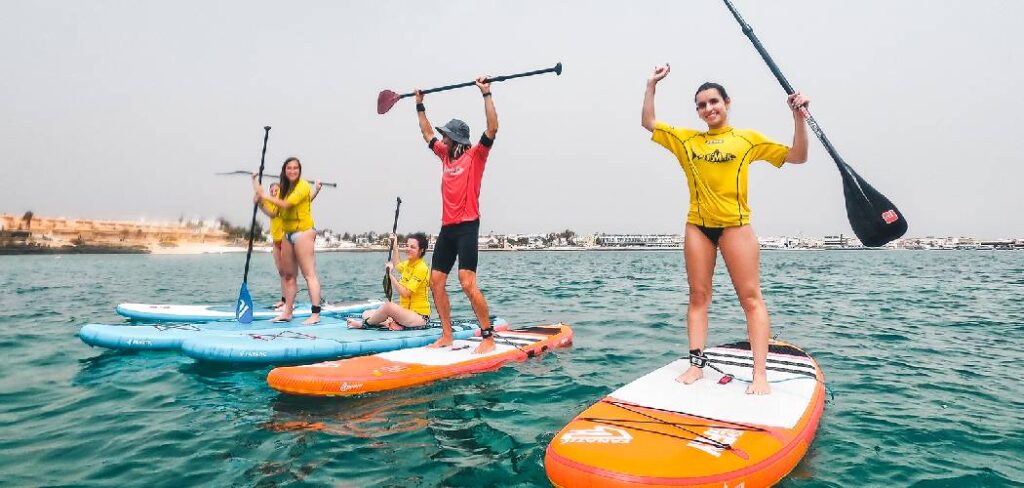
Understanding how to choose a sup sets the foundation for a successful paddling journey. You need a stand-up paddleboard that supports your weight, matches your skill level, and fits your storage capabilities. With hundreds of shapes, sizes, and materials available, navigating the paddleboard market often feels overwhelming for new paddlers.
This guide walks you through the exact decision-making process for buying your first paddleboard. You will learn the differences between hull types, how volume affects stability, and the exact dimensions you need. Let’s dive into the details so you can confidently purchase a board and get out on the water.
Why Learning How to Choose a SUP is Essential for Beginners
Selecting the correct paddleboard prevents dangerous instability and ensures you can paddle efficiently without exhausting your muscles. A mismatched board actively works against your balance and forward momentum. Stand-up paddleboards operate on precise fluid dynamics based on volume and weight displacement.
If a 200-pound adult steps onto a low-volume board designed for a child, the paddleboard sinks below the water line. This drag forces the paddler to exert double the energy just to move forward. Conversely, a lightweight paddler on a massive, heavy board will struggle to steer or generate speed.
Matching the stand-up paddleboard to your specific body type and activity guarantees a stable, enjoyable ride. You spend less time falling into the water and more time actually paddling. Proper equipment selection ultimately determines whether paddleboarding becomes a lifelong passion or a one-time frustration.
Tools and Materials You’ll Need
Before you hit the water, you must gather a few essential pieces of safety and transport equipment. The paddleboard itself represents only one part of your overall gear setup. Having the right accessories ensures your safety and improves your paddling efficiency.
First, you need a high-quality fiberglass or carbon fiber paddle. A cheap aluminum paddle tires your arms quickly, while a lighter paddle improves your stroke mechanics. You also need a well-fitted personal flotation device (PFD), as the United States Coast Guard classifies paddleboards as vessels outside of surfing zones.
Next, secure a leash to keep the paddleboard attached to your ankle if you fall. Finally, you require a reliable transport method. Inflatable boards need a dual-chamber hand pump and a carrying backpack, while hard paddleboards require crossbars and secure roof racks for your vehicle.
Step-by-Step Guide on How to Choose a SUP
Step 1 – Determine your primary paddling activity
Identify your main paddling environment to decide between a planing hull and a displacement hull. Your activity dictates the fundamental shape of your stand-up paddleboard. Establishing your goals early narrows down your options significantly.
Choose a planing hull if you want to perform yoga, ride small ocean waves, or casually paddle on calm lakes. A planing hull features a wide, flat bottom that rides entirely on top of the water. This design maximizes side-to-side stability and allows for easy turning.
Choose a displacement hull if you plan to race or cover long distances on flat water. Displacement hulls feature a pointed nose that slices through the water like a kayak. This shape increases your glide speed and straight-line tracking, but sacrifices some initial stability.
Step 2 – Decide between a solid and inflatable board
Select an inflatable paddleboard for easy storage and durability, or choose a solid board for optimal speed and performance. Your storage space and transport vehicle play the biggest roles in this decision. Both materials offer distinct advantages for different lifestyles.
Inflatable stand-up paddleboards utilize a dropstitch core surrounded by durable PVC layers. When you inflate them to 15 PSI, they become incredibly rigid and stable. These models roll up into a backpack, making them perfect for paddlers living in apartments or driving compact cars.
Solid paddleboards feature an EPS foam core wrapped in fiberglass and epoxy resin. Because they lack the thick, rounded rails of inflatable boards, solid models sit lower in the water and glide faster. You should buy a solid board if you prioritize on-water performance and own a vehicle equipped with proper roof racks.
Step 3 – Calculate the required volume and weight capacity
Multiply your body weight by 1.5 or 2 to find the minimum volume in liters your board requires. A board with sufficient volume keeps you floating high above the water line. Volume dictates exactly how much weight the paddleboard can safely support.
If you weigh 180 pounds, you need a paddleboard with a volume of at least 270 liters for comfortable stability. Knowing how to choose a sup based on volume prevents you from buying a board that sinks under your feet. A sinking board creates massive water resistance and ruins your balance.
Always factor in the weight of your gear, your dog, or your children. If you plan to carry an extra 40 pounds of camping equipment, add that to your body weight before calculating your necessary board volume. This ensures your paddleboard remains buoyant and responsive fully loaded.
Step 4 – Select the correct paddleboard length
Choose a paddleboard length based on your desired speed and maneuverability. Longer boards travel faster and track straighter, while shorter boards turn much easier. Board length fundamentally changes how the vessel handles in the water.
Beginners generally do best with a medium-length board between 10 feet and 11 feet 6 inches. This length provides an ideal balance of glide efficiency and turning control. You can comfortably paddle across a lake without fighting to keep the board perfectly straight.
If you want to surf ocean waves or buy a board specifically for a child, look for a short board under 10 feet. For long-distance touring or racing, choose a long board exceeding 12 feet to maximize your forward momentum. Long boards require fewer corrective paddle strokes to maintain a straight line.
Step 5 – Find the optimal paddleboard width
Select a board width between 32 inches and 34 inches to guarantee beginner-friendly stability. The width of your paddleboard directly impacts how easily you maintain your balance. A wider base gives your feet a larger platform to recover from small wobbles.
Wider boards provide a massive stable platform, making them perfect for beginners, large paddlers, or fitness enthusiasts practicing yoga. However, extreme width creates additional drag in the water. A 35-inch board requires more physical effort to paddle forward than a narrower model.
Narrow boards measuring between 26 inches and 30 inches appeal to advanced paddlers focused on speed. A narrower profile reduces water resistance and allows the paddle to stay closer to the board. This proximity improves your stroke mechanics and protects your shoulders from strain.
Step 6 – Pick the right board thickness
Choose a board thickness of 6 inches if you are buying an inflatable model and weigh more than 160 pounds. Thickness provides the necessary rigidity and volume to keep the board from flexing in the middle. A rigid board transfers your paddling energy directly into forward motion.
A 6-inch thick inflatable paddleboard holds more air, increasing the overall volume and weight capacity. This extra thickness prevents the board from sagging under heavier loads. Sagging creates a banana shape that destroys your glide efficiency and makes steering difficult.
Lightweight paddlers and children can comfortably use a 4-inch or 5-inch thick board. Thinner boards keep your center of gravity lower to the water. This lower stance can slightly improve your balance if your weight falls well under the board’s maximum capacity limit.
Step 7 – Choose the appropriate fin setup
Match your fin setup to your paddling environment to ensure proper tracking and maneuverability. Fins keep the tail of the board from sliding side to side during your paddle stroke. Proper fin selection makes steering significantly easier for beginners.
Choose a single large center fin for flatwater paddling on lakes and calm rivers. A single fin provides the best straight-line tracking and minimizes drag. This setup allows you to take more strokes on one side before needing to switch your paddle to the opposite side.
Select a 2+1 fin setup if you plan to paddle in varied conditions or surf small waves. This configuration features a large center fin flanked by two smaller side fins. The combination delivers excellent stability and sharper turning capabilities in choppy water.
Common Mistakes When Choosing a SUP
Many beginners buy a paddleboard solely based on price, completely ignoring the manufacturer’s weight capacity limits. Purchasing a board that is too small for your body weight guarantees a miserable, unstable experience. You will spend your entire afternoon struggling to stand up instead of enjoying the scenery.
Another frequent error involves ignoring the paddle quality. Beginners often spend their entire budget on the paddleboard and settle for a heavy, flimsy aluminum paddle. A heavy paddle fatigues your shoulders rapidly and takes the joy out of your excursion. Investing in a lightweight fiberglass or carbon paddle improves your experience just as much as the board itself.
Finally, new paddlers often overlook the logistics of transport and storage. Buying a 12-foot solid touring board sounds great until you realize it does not fit in your apartment or on your compact car. You must measure your storage space and assess your vehicle before committing to a hard board.
Expert Tips
Prioritize the deck pad quality when comparing different paddleboard models. A thick, textured EVA foam deck pad prevents your feet from going numb during long paddling sessions. Look for diamond or chevron patterns, as these designs actively channel water away from your feet to improve your grip.
Test your board’s inflation valve and hand pump at home before driving to the water. Learning how to properly attach the pump hose and lock the valve saves you from massive frustration at the beach. You should always inflate your board to the manufacturer’s recommended pressure, usually between 15 and 18 PSI, to ensure maximum rigidity.
Always rinse your paddleboard and paddle with fresh water after paddling in the ocean. Saltwater aggressively degrades PVC materials, deck pads, and adjustable paddle shafts over time. Thoroughly drying your board before storing it prevents mold growth and extends the life of your equipment.
Frequently Asked Questions
How much does a beginner stand-up paddleboard cost?
A reliable beginner paddleboard typically costs between $400 and $800. Extremely cheap boards under $300 often feature single-layer PVC construction that flexes under your weight and punctures easily. Premium touring or racing boards can cost upwards of $1,500, but beginners do not need to spend that much for a quality recreational setup.
What is the lifespan of an inflatable paddleboard?
A high-quality inflatable paddleboard lasts between five and ten years with proper care and maintenance. You must keep the board out of direct sunlight when not in use, as prolonged UV exposure weakens the PVC seams. Rinsing the board with fresh water and storing it loosely rolled in a climate-controlled area significantly extends its usable lifespan.
Are wider paddleboards always better for beginners?
Wider paddleboards provide exceptional stability, but they are not always the best choice for every beginner. If a petite paddler uses a 35-inch wide board, they have to reach uncomfortably far over the rail to plant their paddle in the water. This awkward posture leads to shoulder strain and terrible paddling technique.
Which paddleboard material is best for ocean surfing?
Solid paddleboards made from an EPS foam core and epoxy fiberglass offer the best performance for ocean surfing. Hard boards feature finely tuned, sharp rails that bite into the face of a wave, allowing for aggressive turns. Inflatable boards bounce off the water and feature thick, rounded rails that struggle to carve smoothly on a wave.
How do I store a hard stand-up paddleboard during winter?
You should store a hard paddleboard indoors, away from extreme temperature fluctuations and direct sunlight. Keep the board resting in a padded wall rack or suspended from the ceiling to prevent pressure dings on the hull. You must remove the fins and thoroughly wash the entire board with mild soap before packing it away for the season.
Ready to Paddle? Next Steps for Your Journey
Choosing the right equipment transforms a frustrating struggle into a relaxing, joyful adventure. By matching the board’s volume, length, and hull design to your body weight and goals, you guarantee a stable ride. You now possess the knowledge to skip the low-quality gimmicks and invest in a board that will serve you for years.
Understanding how to choose a sup represents the first major milestone in your new watersport hobby. Once your new board arrives, focus on finding a calm, flat body of water for your maiden voyage. Start on your knees to find your center of balance before slowly transitioning to your feet.
Check your local weather conditions, strap on your personal flotation device, and secure your ankle leash. The water is waiting for you. Grab your paddle, step onto your new board, and enjoy the incredible perspective that only paddleboarding can provide.

About Caleb
Caleb Merritt is a Virginia-based outdoor writer and gear analyst who has spent over a decade sleeping on the ground, crossing mountain passes, and obsessively shaving grams off his pack weight. He holds a Bachelor of Science in Environmental Science from James Madison University, where he also served as president of the university’s outdoor recreation club. After graduating, he spent three years as a wilderness educator with a backcountry youth program in the Shenandoah Valley — teaching Leave No Trace ethics, backcountry navigation, and campcraft — before moving into full-time writing in 2018.
His work focuses on one core belief: the best gear is the gear you understand. Whether he’s doing a side-by-side weight comparison of ultralight shelters or writing a beginner’s guide to building a sub-20-lb base weight kit, Caleb writes with the same directness you’d expect from a trusted trail partner. He has logged more than 4,000 miles across iconic routes including the John Muir Trail, the Wind River Range, Vermont’s Long Trail, and the Collegiate Peaks Loop in Colorado.
Areas of Expertise
- Ultralight backpacking systems and base weight optimization
- Tent, tarp, and shelter testing across three-season and shoulder-season conditions
- Sleeping bag and quilt temperature rating verification
- Backpacking nutrition, meal planning, and calorie-per-ounce analysis
- Leave No Trace principles and wilderness ethics
- Campfire safety, bear country protocols, and water treatment methods
- Gear care, repair, and long-term durability assessment
Education
James Madison University — B.S. in Environmental Science, 2015
During his time at JMU, Caleb served as President of the Outdoor Recreation Club, where he planned and led more than 30 backcountry trips annually across the Blue Ridge Mountains and Appalachian Trail corridor. The role sharpened his ability to assess gear performance under real conditions, manage group safety in remote environments, and develop the kind of practical trail knowledge that no classroom can teach.
Professional Experience
Gear Writer & Senior Contributor — [campeox.com]
Produces in-depth gear reviews, buyer’s guides, and how-to content across backpacking, camping, and ultralight hiking categories. Tests all gear in real field conditions before publishing recommendations.
Wilderness Educator & Trip Leader — Shenandoah Backcountry Youth Program — 2015–2018 Led multi-day backcountry expeditions for teens and young adults throughout Shenandoah National Park and George Washington National Forest. Taught LNT principles, orienteering, first aid awareness, and campcraft fundamentals.
Outdoor Recreation Club President — James Madison University — 2013–2015 Organized and led university-sponsored hiking, backpacking, and camping trips in the Blue Ridge Mountains and Appalachian Trail corridor. Managed club budget, safety protocols, and trip logistics for a membership of 120+ students.
Editorial Standards
Every piece of gear Caleb recommends has been personally tested in the field — not just unboxed and described. His review process includes a minimum of two overnight trips per shelter, a full-season evaluation for sleep systems, and side-by-side comparisons wherever possible. He does not accept payment for positive reviews. Affiliate relationships, where they exist, are always disclosed in accordance with FTC guidelines.
All factual claims about gear specifications, trail distances, and safety recommendations are cross-referenced against manufacturer data sheets and established sources such as the Leave No Trace Center for Outdoor Ethics and the American Hiking Society before publication.