Nothing ruins a beautiful afternoon ride quite like a painful seat. You might think that enduring saddle soreness is just an unavoidable part of cycling. You do not have to suffer through the miles on a seat that feels like a torture device. Learning how to replace a bike saddle completely transforms your relationship with your bicycle.
Upgrading your seat is one of the easiest and most impactful changes you can make to your ride. A proper fit ensures your sit bones carry your weight, rather than your soft tissues. This simple mechanical upgrade takes very little time and requires minimal mechanical experience.
By the time you finish reading this guide, you will possess the knowledge to swap out that uncomfortable seat with confidence. We will cover the tools you need, the exact steps to take, and the sensory details that let you know you are doing it right. Grab your bike, and let us get your ride feeling perfectly tailored to your body.
Why Learning to Replace Your Saddle Matters
Riding a bike should bring you joy, freedom, and a great physical workout. When your seat causes immense discomfort, those positive feelings quickly evaporate into frustration. An improperly fitted or overly worn seat forces you to shift your weight constantly. This awkward shifting often leads to lower back pain, knee strain, and numbness in your legs.
Taking control of your bike maintenance empowers you as a cyclist. Many riders feel intimidated by the mechanical components of their bicycles and rush to the local shop for minor tweaks. Changing your seat introduces you to the basic anatomy of your bike. It builds a foundation of confidence that encourages you to tackle other minor maintenance tasks in the future.
Financially, performing this upgrade yourself keeps more money in your pocket. Bike shops charge premium labor rates for tasks that take mere minutes to complete at home. You can redirect those saved funds toward buying a higher quality seat or investing in better riding gear.
Furthermore, having the ability to swap seats means you can test different styles easily. You might find you prefer a heavily cushioned seat for commuting and a firm, narrow profile for weekend road riding. Mastering this simple skill gives you the ultimate freedom to customize your bicycle for any specific riding scenario.
Tools and Materials You’ll Need
Before you begin the replacement process, gather all your supplies in a well-lit workspace. Having everything within arm’s reach prevents you from stopping halfway through the project to hunt down a missing tool. Place your bike on a dedicated repair stand or lean it securely against a sturdy wall.
You only need a few basic items to complete this job successfully. Most of these tools already sit inside a standard household toolbox.
- A new bicycle saddle
- A set of metric Allen keys (usually 4mm, 5mm, or 6mm)
- A tape measure or ruler
- Masking tape or a piece of chalk
- Bicycle-specific waterproof grease
- A clean microfiber cloth
Ensure your Allen keys are in good condition, as worn tools can strip the bolts on your bike. Setting up a small rag on the floor underneath your seatpost will catch any stray dirt or old grease. Now that your tools sit ready, you can move forward with the installation.
Step-by-Step Guide on How to Replace a Bike Saddle
Step 1 – Measure Your Current Saddle Height and Position
Before loosening any bolts, you need to record the exact position of your current seat. Place a strip of masking tape around the seatpost right where it enters the bike frame. This tape acts as a reliable marker so you do not lose your carefully tuned seat height.
Next, take your tape measure and find the distance from the tip of the saddle to the center of the handlebars. Write this measurement down on a piece of paper. This metric helps you understand the forward and backward positioning of your seat.
Finally, note the angle of your current seat by looking at it from the side. You can even place a hardcover book on top of the seat and use a smartphone leveling app to capture the precise angle. Knowing these metrics makes learning how to replace a bike saddle much less intimidating.
Step 2 – Loosen the Seatpost Clamp Bolts
Locate the bolts situated directly underneath your seat. Most modern bicycles use a clamp mechanism holding the metal rails of the seat, secured by either one or two bolts. Grab your Allen key and find the exact size that fits snugly into the head of the bolt.
Turn the Allen key counterclockwise to loosen the tension on the clamp. You will likely feel a brief moment of resistance before the bolt gives way with a satisfying metallic pop. If you have a two-bolt system, loosen each bolt a few turns at a time to release the pressure evenly.
You do not need to remove the bolts completely from their housing. Simply loosen them enough so the top and bottom plates of the clamp separate slightly. Once you see a gap form around the metal rails, you can proceed to the next step.
Step 3 – Remove the Old Saddle
With the clamp sufficiently loose, grab the nose and the back of your old seat. Gently wiggle the seat side to side while pulling backward to free it from the clamping plates. You might hear the metallic scraping sound of the rails sliding against the aluminum clamp.
If the seat feels stuck, avoid yanking it violently, as this could bend the internal clamp pieces. Instead, loosen the Allen bolts one more full turn to widen the gap. The seat should slide completely out of the side or back of the clamping mechanism.
Set your old seat aside and take a moment to inspect the empty clamp. Use your microfiber cloth to wipe away any accumulated dirt, sand, or dried grease from the clamp plates. A clean surface ensures your new seat will grip tightly without creaking during your rides.
Step 4 – Prepare the New Saddle
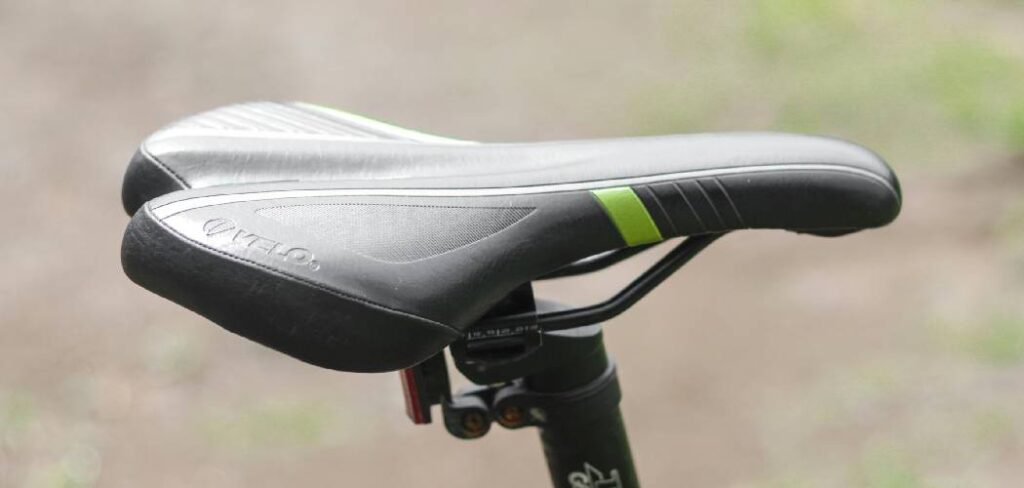
Take your new seat out of its packaging and inspect the metal rails underneath. These rails serve as the critical connection point between your body weight and the bicycle frame. Apply a tiny smear of bicycle grease to the straight sections of these rails using your fingertip.
The grease prevents annoying creaking noises that often develop when metal rubs against metal under heavy loads. You will notice the thick, synthetic smell of the grease as you spread it thinly along the rails. Wipe away any excess grease with your cloth so it does not attract dirt later on.
Hold the new seat above the bike to ensure it faces the correct direction. The narrow nose always points toward the handlebars, while the wide rear section supports your sit bones. You are now ready to introduce the new seat to the seatpost clamp.
Step 5 – Insert the New Saddle into the Clamp
Maneuver the greased rails of your new seat directly between the upper and lower plates of the loosened clamp. You might need to tilt the nose of the seat upward slightly to slip the rails in smoothly. Listen for the soft clinking sound as the metal rails settle into the grooved channels of the lower plate.
Ensure both rails sit evenly within the grooves of the clamping mechanism. If one rail sits outside the groove, tightening the bolts will crush the rail and ruin your new seat. Take a close look underneath with a flashlight if the lighting in your workspace feels dim.
Once the rails rest comfortably in their designated channels, hold the seat steady with one hand. Use your free hand to finger-tighten the bolts just enough to hold the seat lightly in place. You want the seat to stay attached but remain loose enough to slide forward and backward.
Step 6 – Adjust the Position and Angle
Refer back to the measurements you recorded during the very first step of this project. Slide the seat forward or backward along its rails until the distance from the nose to the handlebars matches your notes. Understanding this specific positioning is a key part of figuring out how to replace a bike saddle successfully.
Next, check the angle of the new seat by placing your hardcover book across the top again. Most riders prefer a perfectly level seat, though some prefer a very slight downward tilt at the nose. Adjust the angle by tilting the seat until your leveling tool shows a flat surface.
Sit on the bike gently while leaning against a wall to test the preliminary feel. Pay attention to how your sit bones connect with the wide rear portion of the padding. If you feel excessive pressure on your hands or soft tissues, adjust the tilt accordingly before moving on.
Step 7 – Securely Tighten the Bolts
Grab your Allen key and prepare to lock the new seat permanently into place. Begin tightening the bolt clockwise, applying firm, steady pressure. If you have a two-bolt clamp, alternate tightening the front and rear bolts a quarter-turn at a time.
Alternating the tension ensures the clamp plates pull down evenly across the metal rails. You will feel the resistance increase significantly as the bolts bite down and secure the mechanism. Tighten the bolts firmly, but avoid using your entire body weight, which can strip the metal threads.
Wipe down the seat and the clamp one last time with your microfiber cloth to remove any stray grease or fingerprints. Remove the masking tape from your seatpost. Give the nose of the seat a firm tap with your palm to verify it does not tilt or slide under pressure.
Common Mistakes When Replacing a Saddle
Many beginners rush the tightening process and crank down on the bolts unevenly. This mistake often results in a seat that points slightly to the left or right rather than tracking straight over the frame. Always stand directly behind the rear wheel and look forward to ensure the nose of the seat aligns perfectly with the center of your handlebars.
Another frequent error involves discarding the old measurements and guessing the new position. Your body adapts to a very specific reach and height over hundreds of miles of riding. Guessing the placement often leads to unexpected knee pain or lower back fatigue on your very next ride.
Over-tightening the clamp bolts represents a hidden danger that ruins expensive bike components. Crushing the seat rails or snapping the bolt heads leaves your bicycle completely unrideable. Use a torque wrench if you have access to one, or simply tighten until the bolt feels snug and resists firm hand pressure.
Finally, riders sometimes fail to test their new setup on a short, low-stakes ride. Heading out for a fifty-mile journey immediately after swapping seats guarantees a miserable experience if the angle sits slightly off. Always take a short trip around the neighborhood with your Allen key in your pocket to make micro-adjustments.
Expert Tips
Your seat height requires slight adjustment whenever you change to a different brand or model. The padding thickness and rail height vary significantly between different manufacturers. You may need to raise or lower your actual seatpost a few millimeters to achieve the exact leg extension you had previously.
Listen carefully to your bike during the first few rides after a replacement. A rhythmic ticking or creaking sound usually indicates that the clamp bolts need a quarter-turn of tightening. Dust and vibrations can cause newly installed bolts to back out slightly during their initial break-in period.
Do not judge a new seat based strictly on the first ten minutes of riding. Your sit bones need time to adjust to the new contact points and foam density. Give your body at least three to five moderate rides to adapt before deciding if the new shape truly works for you.
When shopping for an upgrade, prioritize the width of the seat over the thickness of the padding. A seat that properly matches the width of your skeletal sit bones provides superior comfort compared to a narrow seat buried under two inches of gel foam. Many local bike shops offer specialized tools that measure your sit bone width accurately.
Frequently Asked Questions
Can I put any saddle on any bike?
Most modern bicycles use a standardized two-rail system that makes seats universally compatible across different brands. However, older vintage bikes or specialized stationary exercise bikes sometimes use proprietary mounting brackets. Always check the clamp style underneath your current seat before purchasing a replacement to ensure the rail system matches.
How do I stop my new seat from creaking?
Creaking noises typically originate from dry metal rails rubbing against dry aluminum clamp plates. You can fix this easily by disassembling the clamp and applying a thin layer of waterproof bicycle grease to the rails. Ensure your bolts are tightened securely, as a loose clamp also creates excessive noise during pedaling.
Why do my knees hurt after changing my seat?
Knee pain usually indicates that your new seat sits at the wrong height or distance from the pedals. If your seat sits too low, the front of your knee absorbs too much pressure during the pedal stroke. Raise your seatpost slightly and ensure the seat has not slid too far forward on its rails.
Do I need a torque wrench for this job?
While a torque wrench provides exact tightness, you do not strictly need one for a basic seat replacement. You can achieve a safe tightness by using a standard Allen key and tightening until your hand meets firm, unyielding resistance. Just avoid using long breaker bars or your body weight to crank the bolts down.
How often should I replace my bicycle saddle?
You should replace your seat when the outer material tears, the internal foam loses its shape, or the metal rails bend. High-quality seats typically last for several thousands of miles of riding. If you experience new, unexplained discomfort on a seat you have owned for years, the internal padding has likely collapsed.
Read More: How To Replace A Tube On A Bike
Conclusion
Taking charge of your bicycle maintenance opens up a new world of confidence and comfort. You no longer have to rely on expensive mechanics for minor adjustments to your riding setup. This single modification drastically improves the quality of your time spent pedaling outdoors.
By following the careful steps outlined above, you have successfully learned how to replace a bike saddle safely. You recorded your metrics, applied fresh grease, and secured the bolts perfectly. Your bicycle now features a customized contact point that respects your body and enhances your endurance.
Now it is time to put your hard work to the ultimate test out on the pavement or the trails. Grab your helmet, fill up your water bottles, and take your newly upgraded bicycle out for a spin around the block today.

About Caleb
Caleb Merritt is a Virginia-based outdoor writer and gear analyst who has spent over a decade sleeping on the ground, crossing mountain passes, and obsessively shaving grams off his pack weight. He holds a Bachelor of Science in Environmental Science from James Madison University, where he also served as president of the university’s outdoor recreation club. After graduating, he spent three years as a wilderness educator with a backcountry youth program in the Shenandoah Valley — teaching Leave No Trace ethics, backcountry navigation, and campcraft — before moving into full-time writing in 2018.
His work focuses on one core belief: the best gear is the gear you understand. Whether he’s doing a side-by-side weight comparison of ultralight shelters or writing a beginner’s guide to building a sub-20-lb base weight kit, Caleb writes with the same directness you’d expect from a trusted trail partner. He has logged more than 4,000 miles across iconic routes including the John Muir Trail, the Wind River Range, Vermont’s Long Trail, and the Collegiate Peaks Loop in Colorado.
Areas of Expertise
- Ultralight backpacking systems and base weight optimization
- Tent, tarp, and shelter testing across three-season and shoulder-season conditions
- Sleeping bag and quilt temperature rating verification
- Backpacking nutrition, meal planning, and calorie-per-ounce analysis
- Leave No Trace principles and wilderness ethics
- Campfire safety, bear country protocols, and water treatment methods
- Gear care, repair, and long-term durability assessment
Education
James Madison University — B.S. in Environmental Science, 2015
During his time at JMU, Caleb served as President of the Outdoor Recreation Club, where he planned and led more than 30 backcountry trips annually across the Blue Ridge Mountains and Appalachian Trail corridor. The role sharpened his ability to assess gear performance under real conditions, manage group safety in remote environments, and develop the kind of practical trail knowledge that no classroom can teach.
Professional Experience
Gear Writer & Senior Contributor — [campeox.com]
Produces in-depth gear reviews, buyer’s guides, and how-to content across backpacking, camping, and ultralight hiking categories. Tests all gear in real field conditions before publishing recommendations.
Wilderness Educator & Trip Leader — Shenandoah Backcountry Youth Program — 2015–2018 Led multi-day backcountry expeditions for teens and young adults throughout Shenandoah National Park and George Washington National Forest. Taught LNT principles, orienteering, first aid awareness, and campcraft fundamentals.
Outdoor Recreation Club President — James Madison University — 2013–2015 Organized and led university-sponsored hiking, backpacking, and camping trips in the Blue Ridge Mountains and Appalachian Trail corridor. Managed club budget, safety protocols, and trip logistics for a membership of 120+ students.
Editorial Standards
Every piece of gear Caleb recommends has been personally tested in the field — not just unboxed and described. His review process includes a minimum of two overnight trips per shelter, a full-season evaluation for sleep systems, and side-by-side comparisons wherever possible. He does not accept payment for positive reviews. Affiliate relationships, where they exist, are always disclosed in accordance with FTC guidelines.
All factual claims about gear specifications, trail distances, and safety recommendations are cross-referenced against manufacturer data sheets and established sources such as the Leave No Trace Center for Outdoor Ethics and the American Hiking Society before publication.