Picture this: you are sitting dead still in your tree stand while the morning frost clings to the oak branches around you. The woods are waking up, and a massive buck could step into the clearing at any second. However, you cannot even focus on the tree line because your toes feel like blocks of solid ice inside your boots. The biting cold radiates up your legs, making you want to pack up and head straight back to the truck.
Every seasoned outdoorsman has experienced this miserable sensation at least once. We all know that once your extremities freeze, your concentration shatters completely. That is why understanding exactly how to keep feet warm during hunting is an absolute necessity for anyone serious about late-season pursuits. By preparing properly, you can stay out in the timber comfortably all day long. Let us dive into the methods that actually work out in the frozen woods.
Why Learning How to Keep Your Feet Warm Matters
Ignoring the cold does not just ruin a peaceful morning in the woods; it actively destroys your chances of a successful harvest. When your body registers extreme cold in your extremities, it begins pulling warm blood back toward your vital organs to protect your core. This biological reaction causes uncontrollable shivering, which translates to unwanted movement in the stand. Deer and other game animals possess incredible vision and will spot that shivering from a mile away.
Beyond stealth, there is a very real safety element to consider. Prolonged exposure to freezing temperatures without adequate protection leads directly to frostnip or even severe frostbite. You need your mobility to navigate treacherous, icy terrain on the hike back to camp safely. If you cannot feel your toes, a twisted ankle or a dangerous fall becomes highly likely. Keeping your foundation warm keeps your mind sharp, your body still, and your overall hunting experience safe.
Tools and Materials You’ll Need
Building an impenetrable fortress of warmth around your feet requires assembling a specific kit before you ever leave the house. First and foremost, you must acquire high-quality merino wool socks in both lightweight and heavyweight variations. You also need a dedicated pair of hunting boots featuring appropriate Thinsulate or similar insulation rated for the specific temperatures you plan to encounter.
Next, grab a pack of chemical toe warmers from your local sporting goods store. You will also want a canister of unscented antiperspirant foot spray, which sounds strange but plays a massive role in temperature regulation. For late-season stationary hunts, a set of insulated boot blankets is a game-changing addition to your pack. Finally, ensure you have a reliable boot dryer waiting at home or back at base camp. Every single item mentioned here works together as a complete system to trap body heat and banish the cold.
Step-by-Step Guide on How to Keep Feet Warm During Hunting
Step 1: Start with a Solid Foundation of Moisture Management
Sweat is the absolute worst enemy of warmth when you are out in the wilderness. If your feet sweat during the long hike to your hunting spot, that moisture will eventually freeze as you sit still. To prevent this, thoroughly wash and dry your feet before putting on any gear.
Once your skin is dry, apply a light coat of unscented antiperspirant spray directly to your feet. This stops the sweat glands from producing moisture during periods of high exertion. Allow the spray to dry completely before pulling on your first layer of clothing.
Step 2: Wear a Moisture-Wicking Liner Sock
Your first layer of clothing must be a thin liner sock made from synthetic materials or lightweight merino wool. Never let cotton touch your skin in the woods, as cotton absorbs moisture and holds it directly against your flesh. The liner sock acts as a transport system, pulling any residual sweat away from your skin.
This thin layer also prevents friction between your skin and the heavier outer sock, dramatically reducing the chance of painful blisters. Make sure the liner fits snugly without restricting your circulation. Smooth out any wrinkles around the heel and toes before moving on to the next layer.
Step 3: Layer Your Socks Correctly
Next, pull a thick, heavyweight merino wool sock over the thin liner you just applied. Merino wool is the undisputed champion of outdoor fabrics because it retains its insulating properties even if it manages to get damp. When you figure out how to keep feet warm during hunting, you quickly realize that trapping trapped air is the secret.
The thick loops of wool create tiny pockets of dead air that your body heat warms up over time. Ensure this heavy sock comes up high enough on your calf to overlap with your base layer thermals. This overlap prevents any cold drafts from sneaking in around your ankles while you climb into your stand.
Step 4: Choose the Right Insulated Boots for the Conditions
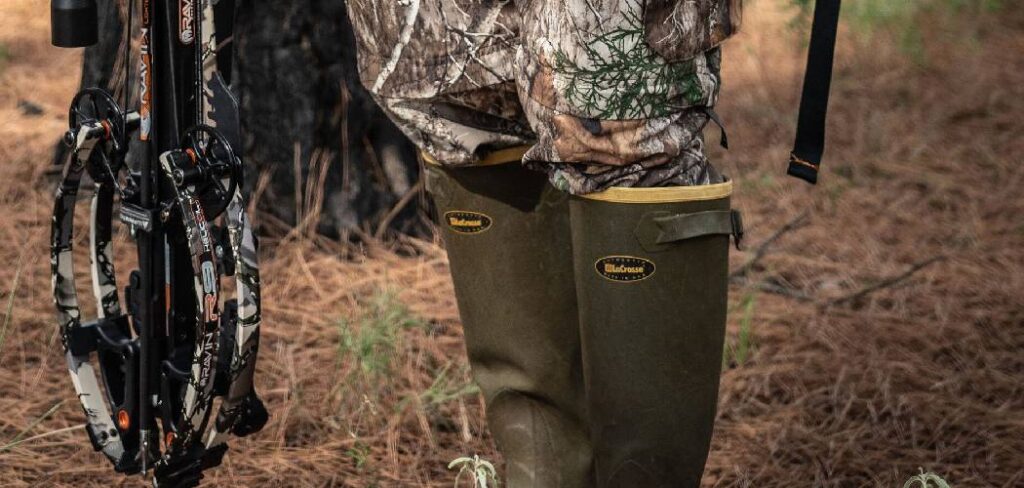
Not all hunting boots are created equal, and wearing uninsulated rubber boots in a snowstorm is a recipe for misery. Check the weather forecast and select a boot with an appropriate insulation weight, typically measured in grams. For active hiking in mild cold, four hundred grams of insulation might be perfect.
However, if you are sitting motionless in a deer stand during a blizzard, you will likely need boots packed with eight hundred to twelve hundred grams of insulation. The boot must also feature a thick, aggressive rubber sole to put plenty of distance between the bottom of your foot and the frozen ground.
Step 5: Loosen Your Laces to Promote Blood Flow
A common rookie mistake is tying hunting boots as tightly as work boots. While you need ankle support for the hike in, tight laces restrict the flow of warm blood down to your toes. Once your circulation drops, your feet will freeze regardless of how much insulation you are wearing.
Lace your boots firmly enough to prevent heel slip during your walk, but leave the top sections slightly relaxed. Once you arrive at your blind or stand, reach down and loosen the laces even further. This allows the blood to circulate freely, constantly delivering fresh warmth right down to the tips of your toes.
Step 6: Apply Chemical Toe Warmers Strategically
When the temperature plummets below freezing, chemical heat packets provide an excellent external heat source. However, a major element of how to keep feet warm during hunting involves placing these warmers correctly. Most people stick them directly to the bottom of their toes, which creates uncomfortable pressure points when walking.
Instead, stick the adhesive side of the warmer to the top of your toes, right over the thick wool sock. The blood vessels run closer to the surface on the top of your foot, allowing the heat to enter your bloodstream more efficiently. Wait to activate and apply these warmers until you are actually settling into your stationary hunting position.
Step 7: Utilize Boot Blankets Once You Reach the Stand
If you hunt in sub-zero temperatures, even the heaviest boots might not be enough to sustain your heat for eight hours. Insulated boot blankets are large, oversized covers that zip entirely over your muddy hunting boots. You carry them in your backpack and deploy them the moment you get settled.
They act like sleeping bags for your feet, trapping all the residual heat escaping from your boots. Some hunters even toss a large chemical hand warmer inside the boot blanket before zipping it up. This creates a miniature furnace around your feet, ensuring you stay comfortable until the sun finally sets.
Critical Mistakes That Will Ruin Your Lenses
While you are managing the biting cold affecting your body, you also have to manage how the extreme temperature drops affect your valuable hunting gear. Your rifle scope and binoculars are your lifelines in the woods, and cold weather is notoriously brutal on optical glass. When you exhale warm breath heavily after a long hike, or when you bring a freezing scope into a warm truck cabin, the glass fogs up instantly.
In a panic to see clearly, many hunters grab the hem of their wool shirt, a rough cotton bandana, or a dirty hunting glove to violently wipe the condensation away. This is a critical mistake that grinds microscopic dirt, ice crystals, and debris directly into the expensive anti-reflective coatings of your lenses. Over time, this abrasive wiping creates permanent scratches that catch the glare of the sun and completely ruin the optical clarity of your gear. Instead of scrubbing the glass, you must manage temperature transitions slowly and use the right tools for moisture removal.
Expert Cleaning Tips
To protect your expensive hunting optics in the harsh winter environment, you must carry a dedicated lens cleaning kit in your chest rig or backpack. Start by using a soft-bristled lens pen brush to gently sweep away any frozen snow, pine needles, or dirt from the glass surface. Never apply pressure during this step; simply let the bristles flick the debris away.
Once the abrasive dirt is gone, use a microfiber cloth specifically designed for optical glass to gently dab away moisture. If your scope fogs up due to your breath, avoid wiping it entirely if possible. Instead, wait a few moments for the dry winter air to naturally evaporate the condensation, ensuring your lenses remain pristine season after season.
Frequently Asked Questions
Do cotton socks work for cold weather hunting?
Cotton socks are absolutely terrible for any cold weather outdoor activity. Cotton fibers absorb and hold onto sweat, keeping wet material pressed tightly against your skin. In freezing temperatures, this wet fabric rapidly pulls heat away from your body, leaving your feet freezing cold. Always choose moisture-wicking synthetic materials or high-quality merino wool instead.
Should I buy hunting boots a size larger?
Yes, buying your late-season hunting boots a half size to a full size larger is a very smart strategy. You need extra physical space inside the boot to accommodate the thickness of your heavy wool socks. Furthermore, this extra room creates a pocket of dead air around your foot, which your body heat warms up to provide superior insulation.
How do battery-heated socks perform in the field?
Battery-heated socks have improved significantly in recent years and can be incredibly effective for stationary hunts. They provide a steady source of active heat directly to your toes via slim wire elements. However, you must manage the battery life carefully, and you should never rely on them completely without wearing a good insulating boot just in case the batteries die.
Can I use plastic bags over my socks?
Using plastic bags over your socks is an old-school trick called a vapor barrier, but it is highly controversial. While it prevents cold wind from penetrating and keeps exterior moisture out, it also completely traps your own sweat inside the bag. If you are walking a long distance, your feet will become soaked in sweat, which often leads to severe cold once you stop moving.
Why do my feet still get cold despite heavy insulation?
If your feet are still freezing inside heavily insulated boots, the culprit is almost always poor circulation or trapped sweat. If your boots or socks are too tight, they restrict the warm blood from reaching your toes. Alternatively, if your feet sweat on the walk to the stand, that dampness will destroy the insulating value of your gear, making you feel cold regardless of the boot’s thickness.
Conclusion
Conquering the biting winter weather is a rite of passage for every dedicated outdoorsman. By investing in the right materials, utilizing proper layering techniques, and managing moisture effectively, you can completely transform your time in the tree stand. You no longer have to suffer through the shivering misery that ruins so many late-season trips.
Knowing exactly how to keep feet warm during hunting guarantees that you remain focused, incredibly still, and ready for the exact moment your target steps into the clearing. You will be able to outlast the dropping temperatures and outlast the other hunters who retreat to their trucks by mid-morning. Take the time to implement these strategies before your next excursion. Check your gear, prep your boots, and get back out into the timber where you belong.

About Caleb
Caleb Merritt is a Virginia-based outdoor writer and gear analyst who has spent over a decade sleeping on the ground, crossing mountain passes, and obsessively shaving grams off his pack weight. He holds a Bachelor of Science in Environmental Science from James Madison University, where he also served as president of the university’s outdoor recreation club. After graduating, he spent three years as a wilderness educator with a backcountry youth program in the Shenandoah Valley — teaching Leave No Trace ethics, backcountry navigation, and campcraft — before moving into full-time writing in 2018.
His work focuses on one core belief: the best gear is the gear you understand. Whether he’s doing a side-by-side weight comparison of ultralight shelters or writing a beginner’s guide to building a sub-20-lb base weight kit, Caleb writes with the same directness you’d expect from a trusted trail partner. He has logged more than 4,000 miles across iconic routes including the John Muir Trail, the Wind River Range, Vermont’s Long Trail, and the Collegiate Peaks Loop in Colorado.
Areas of Expertise
- Ultralight backpacking systems and base weight optimization
- Tent, tarp, and shelter testing across three-season and shoulder-season conditions
- Sleeping bag and quilt temperature rating verification
- Backpacking nutrition, meal planning, and calorie-per-ounce analysis
- Leave No Trace principles and wilderness ethics
- Campfire safety, bear country protocols, and water treatment methods
- Gear care, repair, and long-term durability assessment
Education
James Madison University — B.S. in Environmental Science, 2015
During his time at JMU, Caleb served as President of the Outdoor Recreation Club, where he planned and led more than 30 backcountry trips annually across the Blue Ridge Mountains and Appalachian Trail corridor. The role sharpened his ability to assess gear performance under real conditions, manage group safety in remote environments, and develop the kind of practical trail knowledge that no classroom can teach.
Professional Experience
Gear Writer & Senior Contributor — [campeox.com]
Produces in-depth gear reviews, buyer’s guides, and how-to content across backpacking, camping, and ultralight hiking categories. Tests all gear in real field conditions before publishing recommendations.
Wilderness Educator & Trip Leader — Shenandoah Backcountry Youth Program — 2015–2018 Led multi-day backcountry expeditions for teens and young adults throughout Shenandoah National Park and George Washington National Forest. Taught LNT principles, orienteering, first aid awareness, and campcraft fundamentals.
Outdoor Recreation Club President — James Madison University — 2013–2015 Organized and led university-sponsored hiking, backpacking, and camping trips in the Blue Ridge Mountains and Appalachian Trail corridor. Managed club budget, safety protocols, and trip logistics for a membership of 120+ students.
Editorial Standards
Every piece of gear Caleb recommends has been personally tested in the field — not just unboxed and described. His review process includes a minimum of two overnight trips per shelter, a full-season evaluation for sleep systems, and side-by-side comparisons wherever possible. He does not accept payment for positive reviews. Affiliate relationships, where they exist, are always disclosed in accordance with FTC guidelines.
All factual claims about gear specifications, trail distances, and safety recommendations are cross-referenced against manufacturer data sheets and established sources such as the Leave No Trace Center for Outdoor Ethics and the American Hiking Society before publication.