Your reliable daypack goes through a lot during daily commutes, weekend hikes, and outdoor adventures. Over time, that trusty fabric collects dirt, sweat, and mysterious stains from everyday use. You might feel tempted to toss the entire bag into a washing machine, but doing so can permanently damage the signature canvas and synthetic materials.
Learning the proper techniques for fabric care will keep your favorite gear looking pristine for years to come. Understanding how to wash herschel backpack components safely protects the structural integrity of the bag while removing deeply embedded grime. This guide walks you through a simple, safe, and highly effective hand-washing method. Our beginner-friendly tutorial provides the precise steps, tool recommendations, and expert techniques you need to restore your gear safely.
Why Cleaning Your Bag Matters for Beginners
Campers, students, and outdoor beginners often overlook routine gear maintenance until a massive stain appears. Taking the time to master basic fabric care extends the lifespan of your expensive outdoor gear significantly. Dirt and grit act like microscopic sandpaper against woven fibers, slowly degrading the material every time you move.
Regular cleaning prevents this premature wear and tear while eliminating bacteria that cause foul odors. A well-maintained bag also retains its weather resistance, keeping your electronics and extra clothing safe from unexpected rain showers. Developing a consistent cleaning routine transforms you from a casual user into a responsible gear owner. You will save money on replacements and always step out the door with equipment that looks sharp and smells incredibly fresh.
Tools and Materials You Will Need
Gathering the right supplies beforehand makes the entire cleaning process smooth and stress-free. You will need a large basin, bathtub, or deep sink to hold your cleaning solution. Grab a gentle, dye-free liquid detergent or mild dish soap to lift away dirt without stripping the fabric colors. You also need a soft-bristled brush, like an old toothbrush, to gently agitate stains without fraying the woven canvas.
Keep a clean, uncolored microfiber cloth or sponge nearby for wiping down large surface areas on the exterior. You should also have two dry, highly absorbent bath towels ready to help press out excess moisture during the drying phase. For added convenience, bring along a specialized fabric stain remover pen as an optional item. This optional tool makes spot-treating sudden ink or food spills much easier before you begin the full washing process.
8 Step-by-Step Guide on How To Wash Herschel Backpack
Step 1 – Emptying All Pockets and Compartments
Begin by unzipping every single compartment, including the hidden sleeves and tiny front pouches. You must remove every item, from forgotten pens and loose coins to old snack wrappers hiding in the corners. Shake the bag upside down over a trash can to dislodge big crumbs and loose debris.
Run your fingers along the bottom seams of the interior lining to catch hidden dirt clumps. Leaving a stray pen or lip balm inside can cause disastrous permanent stains once the fabric gets wet. Double-check the laptop sleeve and any media pockets to ensure absolutely nothing remains inside. Taking your time during this initial sweep prevents annoying accidents and sets you up for a successful deep clean.
Step 2 – Removing Loose Dirt and Surface Debris
Once the interior is completely empty, take your bag outside to brush away the surface dirt. Hold the bag firmly by the top handle and give it a few solid pats on the bottom panel to knock dust loose. Use a dry microfiber cloth or your soft-bristled brush to gently sweep the exterior canvas.
Work your way from the top of the straps down to the reinforced bottom panel. Pay special attention to the creases near the zippers, as dust loves to settle into these tight grooves. Removing this dry dirt now prevents you from creating a muddy, difficult mess once you introduce water. A quick dry brushing significantly reduces the amount of scrubbing you will need to do later.
Step 3 – Pre-Treating Stubborn Stains
Inspect the exterior fabric closely under good lighting to identify any dark scuffs, oil marks, or sticky residue. Apply a tiny drop of your mild detergent or your optional stain remover directly onto these problem areas. Use your soft toothbrush to work the soap into the stain using gentle, circular motions.
Do not press down too hard, as aggressive scrubbing can ruin the texture of the durable fabric. Let this concentrated soap sit on the stains for about fifteen minutes so the active ingredients can break down the oils. If you want to master how to wash herschel backpack materials properly, patience during this pre-treatment phase is essential. Allowing the soap time to penetrate the fibers ensures those stubborn marks lift away easily during the main wash.
Step 4 – Preparing Your Cleaning Solution
Fill your clean basin, sink, or bathtub with about four inches of lukewarm water. Avoid using hot water under any circumstances, as high temperatures can shrink the synthetic fibers and warp the padded shoulder straps. Pour one tablespoon of your mild, dye-free liquid detergent into the lukewarm water.
Swish the water around with your hands until the soap dissolves completely and creates a layer of gentle suds. You want the water to feel slightly slippery, but not overwhelmingly thick with heavy foam. Using too much soap makes the rinsing process incredibly frustrating and leaves a sticky residue on the canvas. A light, mild soapy mixture provides more than enough cleaning power to refresh the entire bag safely.
Step 5 – Gently Scrubbing the Exterior Fabric
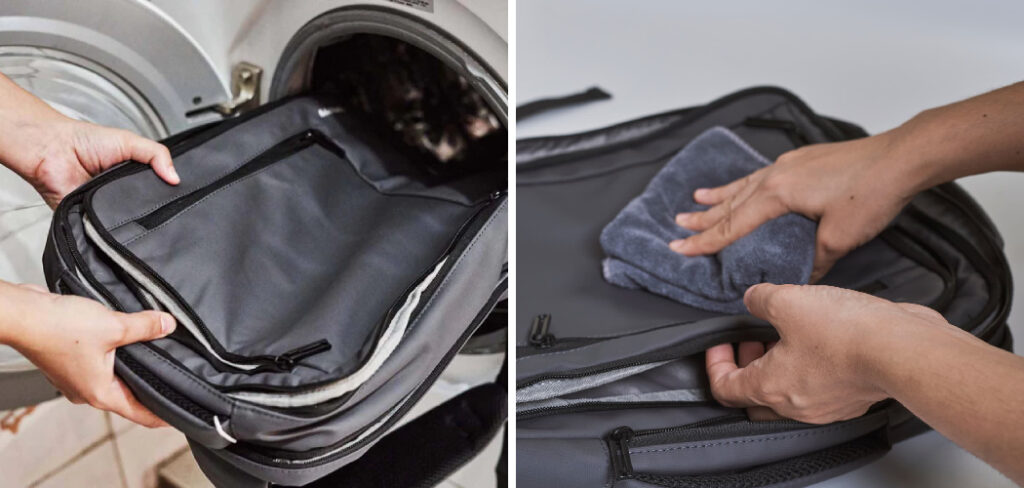
Submerge your soft cloth or sponge into the soapy water and wring out the excess liquid until it is merely damp. Wipe down the entire exterior of the bag, starting from the top zipper and working your way down to the base. Use smooth, overlapping strokes to ensure you cover every inch of the outer fabric evenly.
Whenever you encounter a slightly dirty patch, apply a bit more pressure and use circular motions to lift the grime. Dip your sponge back into the basin frequently to rinse away the dirt it collects, then wring it out again. Avoid fully submerging the bag in the water, as the internal padding takes a massive amount of time to dry. Controlling the moisture level keeps the structural foam inside the straps perfectly safe.
Step 6 – Wiping Down the Interior Lining
The inside of your bag requires just as much attention as the outside, especially if you carry gym clothes or food. Take a fresh, lightly damp cloth and carefully wipe down the distinctive striped interior lining. Focus heavily on the bottom corners where spilled liquids and sticky crumbs usually settle.
Pull the lining outward from the main compartment if possible, allowing you to clean the fabric without soaking the internal padding. Keep your cloth barely damp, as you do not want water pooling inside the bottom of the bag. If you notice a lingering smell inside the main compartment, a tiny drop of soap on your cloth will help neutralize the odor. Wipe the laptop sleeve gently, ensuring you do not damage the soft protective fleece.
Step 7 – Rinsing the Soap Away Carefully
Once you finish scrubbing, you must remove all the leftover soap from the fabric to prevent a stiff, crusty finish. Empty your basin of the dirty, soapy water and refill it with clean, cool water. Take a brand-new, soap-free cloth, dip it into the fresh water, and wring it out thoroughly.
Wipe down the entire exterior and interior of the bag to lift away the lingering detergent suds. You may need to rinse your cloth and repeat this wiping process three or four times to get all the soap out. Leaving dried detergent on the canvas attracts dirt much faster, ruining all the hard work you just put in. Take your time wiping every panel until the fabric feels entirely clean and free of any slippery residue.
Step 8 – Proper Air Drying Techniques
Drying the fabric correctly prevents mold growth and preserves the distinct shape of the panels. Grab your clean, dry bath towels and press them firmly against the wet canvas to absorb the surface moisture. Never twist, fold, or wring the bag, as this forceful action permanently warps the internal padding and ruins the zippers.
Once you absorb the excess water, hang the bag upside down in a well-ventilated area away from direct sunlight. Unzip every single compartment and pull the internal lining outward to promote maximum airflow throughout the interior. Understanding how to wash herschel backpack accessories includes knowing that high heat destroys the material, so never use a machine dryer. Leave the bag hanging for at least twenty-four hours until the thickest parts of the shoulder straps feel completely bone dry.
Common Mistakes When Cleaning Your Gear
Many beginners ruin their outdoor gear by throwing the bag straight into a washing machine. The aggressive tumbling action of a modern washer tears at the seams, destroys the zipper tracks, and severely warps the structural padding. Washing machines also fully submerge the internal foam, trapping water deep inside the straps where it eventually breeds foul-smelling mold. Hand washing remains the only truly safe method for preserving the lifespan of these specific woven materials.
Another frequent error involves using harsh chemical cleaners, bleach, or heavy-duty laundry detergents to tackle tough stains. These intense chemicals instantly strip the vibrant dyes from the canvas, leaving behind ugly, faded blotches. They also break down the microscopic water-resistant coatings applied to the exterior during the manufacturing process. Always stick to gentle, dye-free dish soaps or specialized delicate fabric detergents to protect the integrity of the material.
Finally, attempting to speed up the drying process with heat causes irreversible damage to the synthetic components. Blasting the wet fabric with a hair dryer, leaving it on top of a radiator, or tossing it in a tumble dryer melts the synthetic fibers. Direct sunlight also fades the colors rapidly and bakes the fabric into a stiff, uncomfortable texture. You must always exercise patience and rely strictly on gentle, ambient air drying in a shaded, well-ventilated room.
Expert Tips for Long-Lasting Fabric Care
Maintaining your bag between deep cleans drastically reduces the need for frequent, time-consuming washing sessions. You should immediately spot-treat small spills the moment they happen using a damp paper towel and a single drop of water. Brushing off loose dirt with a dry towel after a long hike stops grime from embedding itself into the woven canvas.
Store your gear in a cool, dry closet when not in use, rather than leaving it in a damp garage or a hot car trunk. Stuffing the main compartment with a few clean, dry towels during storage helps the bag maintain its natural shape over time. You can also apply a light coat of fabric-safe waterproofing spray every six months to repel unexpected rain and prevent liquid stains from setting in deeply.
Frequently Asked Questions
Can I put my bag in the washing machine?
You should absolutely never put your bag in a washing machine under any circumstances. The intense spinning and harsh tumbling action will destroy the internal padding, warp the shape, and damage the heavy-duty zippers. Machine washing also forces water deep into the foam straps, which takes days to dry and often leads to mildew. Always use a gentle hand-washing method with a damp sponge instead.
Is it safe to use bleach on stubborn stains?
You must never use bleach or any harsh household chemicals on the exterior canvas or interior lining. Bleach will instantly strip the color from the fabric, leaving permanent, unsightly white patches. It also breaks down the synthetic fibers, causing the material to weaken and tear easily over time. Stick to mild, dye-free dish soap or baby shampoo for a safe clean.
How do I get rid of bad odors inside the bag?
To neutralize unpleasant odors, leave a small, open box of baking soda inside the main compartment overnight. Baking soda naturally absorbs lingering smells without introducing heavy, artificial perfumes into the fabric. You can also wipe the interior lining with a cloth lightly dampened with a mixture of water and white vinegar. The mild vinegar smell fades entirely as the bag air dries in a well-ventilated space.
Will water damage the synthetic leather details?
Water will not immediately destroy the synthetic leather straps or reinforced bottom panels if you handle them quickly. However, you should avoid soaking these specific areas heavily during your cleaning process. Use a barely damp cloth to gently wipe the faux leather sections, and immediately dry them with a clean towel. Never let water sit on these decorative details for an extended period.
How long does the fabric take to dry completely?
Drying time depends entirely on the humidity and airflow in your chosen drying area, but you should expect it to take twenty-four to forty-eight hours. The exterior canvas usually dries within a day, but the thick foam padded shoulder straps hold moisture much longer. Keep the bag hanging in a shaded room with a fan running until every single component feels entirely dry to the touch.
Conclusion
Taking proper care of your outdoor gear ensures it remains a reliable companion for all your upcoming adventures. By avoiding harsh washing machines and skipping dangerous chemical cleaners, you protect the beautiful design and structural integrity of the fabric. The hand-washing process requires a little patience, but the outstanding results are well worth the effort you put in. Your gear will look incredibly vibrant, smell fresh, and feel just as sturdy as the day you first brought it home.
Establishing a consistent maintenance routine prevents small stains from becoming permanent marks and stops bad odors before they start. Now that you know exactly how to wash herschel backpack materials safely, you can confidently tackle any mess the outdoors throws your way. Gather your mild soap, a soft brush, and a few clean towels, and give your favorite everyday carry the deep clean it truly deserves.

About Caleb
Caleb Merritt is a Virginia-based outdoor writer and gear analyst who has spent over a decade sleeping on the ground, crossing mountain passes, and obsessively shaving grams off his pack weight. He holds a Bachelor of Science in Environmental Science from James Madison University, where he also served as president of the university’s outdoor recreation club. After graduating, he spent three years as a wilderness educator with a backcountry youth program in the Shenandoah Valley — teaching Leave No Trace ethics, backcountry navigation, and campcraft — before moving into full-time writing in 2018.
His work focuses on one core belief: the best gear is the gear you understand. Whether he’s doing a side-by-side weight comparison of ultralight shelters or writing a beginner’s guide to building a sub-20-lb base weight kit, Caleb writes with the same directness you’d expect from a trusted trail partner. He has logged more than 4,000 miles across iconic routes including the John Muir Trail, the Wind River Range, Vermont’s Long Trail, and the Collegiate Peaks Loop in Colorado.
Areas of Expertise
- Ultralight backpacking systems and base weight optimization
- Tent, tarp, and shelter testing across three-season and shoulder-season conditions
- Sleeping bag and quilt temperature rating verification
- Backpacking nutrition, meal planning, and calorie-per-ounce analysis
- Leave No Trace principles and wilderness ethics
- Campfire safety, bear country protocols, and water treatment methods
- Gear care, repair, and long-term durability assessment
Education
James Madison University — B.S. in Environmental Science, 2015
During his time at JMU, Caleb served as President of the Outdoor Recreation Club, where he planned and led more than 30 backcountry trips annually across the Blue Ridge Mountains and Appalachian Trail corridor. The role sharpened his ability to assess gear performance under real conditions, manage group safety in remote environments, and develop the kind of practical trail knowledge that no classroom can teach.
Professional Experience
Gear Writer & Senior Contributor — [campeox.com]
Produces in-depth gear reviews, buyer’s guides, and how-to content across backpacking, camping, and ultralight hiking categories. Tests all gear in real field conditions before publishing recommendations.
Wilderness Educator & Trip Leader — Shenandoah Backcountry Youth Program — 2015–2018 Led multi-day backcountry expeditions for teens and young adults throughout Shenandoah National Park and George Washington National Forest. Taught LNT principles, orienteering, first aid awareness, and campcraft fundamentals.
Outdoor Recreation Club President — James Madison University — 2013–2015 Organized and led university-sponsored hiking, backpacking, and camping trips in the Blue Ridge Mountains and Appalachian Trail corridor. Managed club budget, safety protocols, and trip logistics for a membership of 120+ students.
Editorial Standards
Every piece of gear Caleb recommends has been personally tested in the field — not just unboxed and described. His review process includes a minimum of two overnight trips per shelter, a full-season evaluation for sleep systems, and side-by-side comparisons wherever possible. He does not accept payment for positive reviews. Affiliate relationships, where they exist, are always disclosed in accordance with FTC guidelines.
All factual claims about gear specifications, trail distances, and safety recommendations are cross-referenced against manufacturer data sheets and established sources such as the Leave No Trace Center for Outdoor Ethics and the American Hiking Society before publication.